
The term “Engineer,” as per the Encyclopædia Britannica, finds its etymological roots in the Latin word “Engine,” denoting creation. Engineers are esteemed individuals dedicated to the innovation and development of devices, products, and machineries aimed at benefiting humanity. Engineering, meanwhile, embodies the systematic application of scientific principles to transform raw natural resources into refined end products. Centuries have passed since that first definition, and Engineers still stay true to the mission of serving humankind. Technologies and methodologies are, however, so much different now. Artificial Intelligence (AI) is now available to the public and being utilized to create new content, from text to image to motion picture. In the coming years, the rapid growth of AI is anticipated to persist, enabling its application in solving adaptive problems. This foreseeable landscape would bring in many new opportunities for engineering development but also create challenges to redefine the role of engineers in the not-that-far future.
Engineers nowadays need to be able to realize opportunities, to gather necessary resources to translate a need to ideas and to innovative solutions. They also need to be aware of the practical constraints while being empathetic to different perspectives of the involved stakeholders. Vietnam has emphasized the roles of technology and innovation in its economic development as the nation aims to leapfrog to become a developed economy by 2050. This would elevate the importance of engineering innovation as engineers can make better use of the limited available resources to create more values with technologies and for the social advancement of a developing country.
The engineering program at Fulbright University Vietnam is developed upon a base of liberal arts education, which emphasizes on the holistic development of a person in terms of both cognitive and emotional intelligences and on cultivating a robust self-directed learning ability. Being encouraged to explore different disciplines, students develop a deeper understanding for a broader context of any selected problem. As they discover who they are and what they want, they also value other perspectives and internalize the values of diversity and inclusivity. This would be a suitable mindset for the role of a system integrator of the future engineers as they are motivated to develop innovative solutions for the common good.
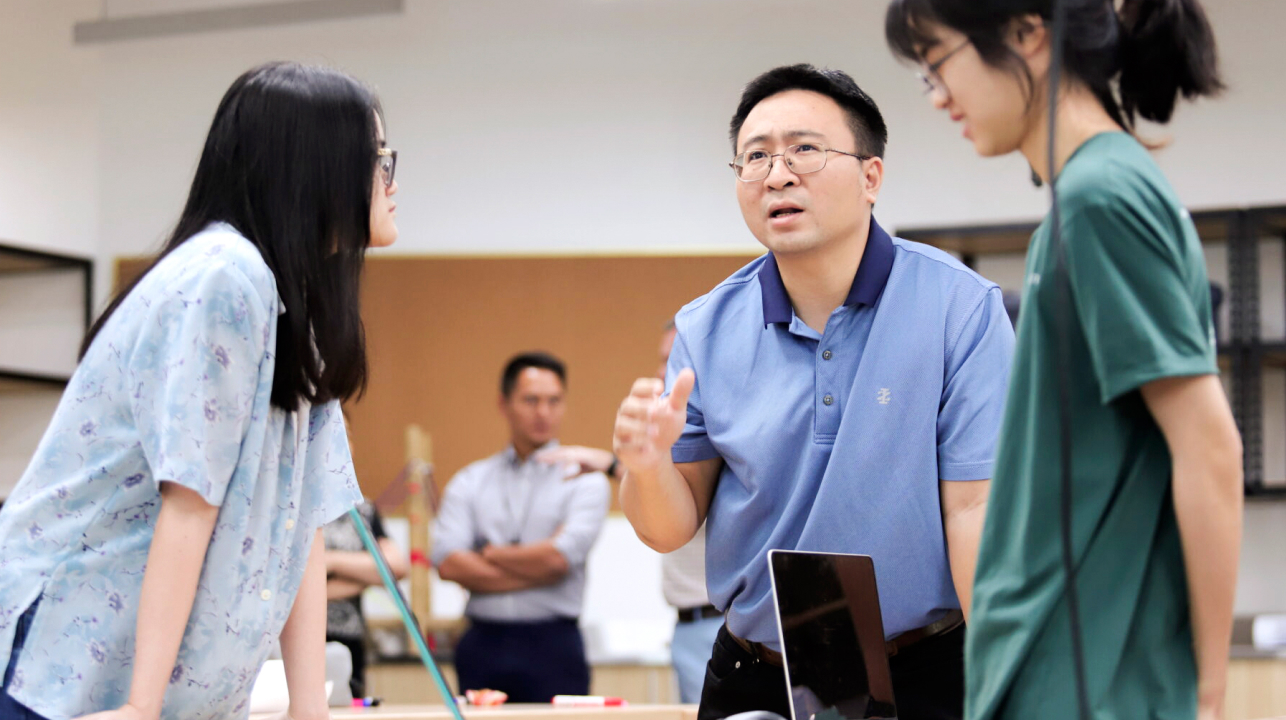
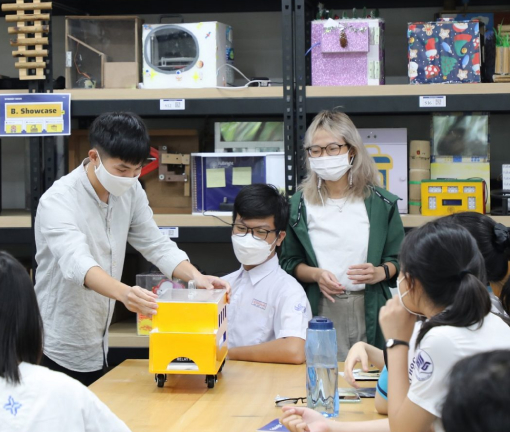
The engineering curriculum is human-centered, multidisciplinary, project-based, future-fit approach while being compatible with the international engineering accreditation ABET (Accreditation Board for Engineering and Technology). The Engineering major courses are designed and developed to provide students with a broad knowledge base of multiple specializations, including Electrical Engineering, Computer Engineering, Mechanical Engineering, Control Theory (Robotics) and Entrepreneurship. The sequence of courses on each of these Engineering specializations range from Foundation level (i.e., 100-level) through Intermediate level (i.e., 200-level) to Advanced level (i.e., 300-level). The Advanced-level courses and two-semester Capstone projects provide students with deep knowledge and a chance to apply what they have learned into real-world problems. In addition, students must complete a well-balanced set of courses in mathematics, natural sciences, arts, humanities, and social sciences to be awarded a bachelor’s degree in engineering. Although students will be required to take half of the minimum number of credits for graduation in engineering, they will have a certain degree of freedom of choosing elective courses to pursue their interest of study with engineering.
👉 Please find detailed information about the Human-Centered Engineering program at: Human-Centered Engineering Major Handbook

 Programming Course (1 required)