
Recently, students from the Developing Vietnam course embarked on an inspiring and memorable field trip to the United States. Through site visits, conversations, and cultural experiences, what stayed with them was not only new perspectives and information, but also a deeper reflection on Vietnam’s development journey: how the world perceives the country, and how Vietnam continues to shape its own narrative. The trip encouraged students to think deeply about their role in that evolving story. Many returned with a desire to contribute to Vietnam’s future, echoing Fulbright University Vietnam’s commitment to nurturing community-minded learners.
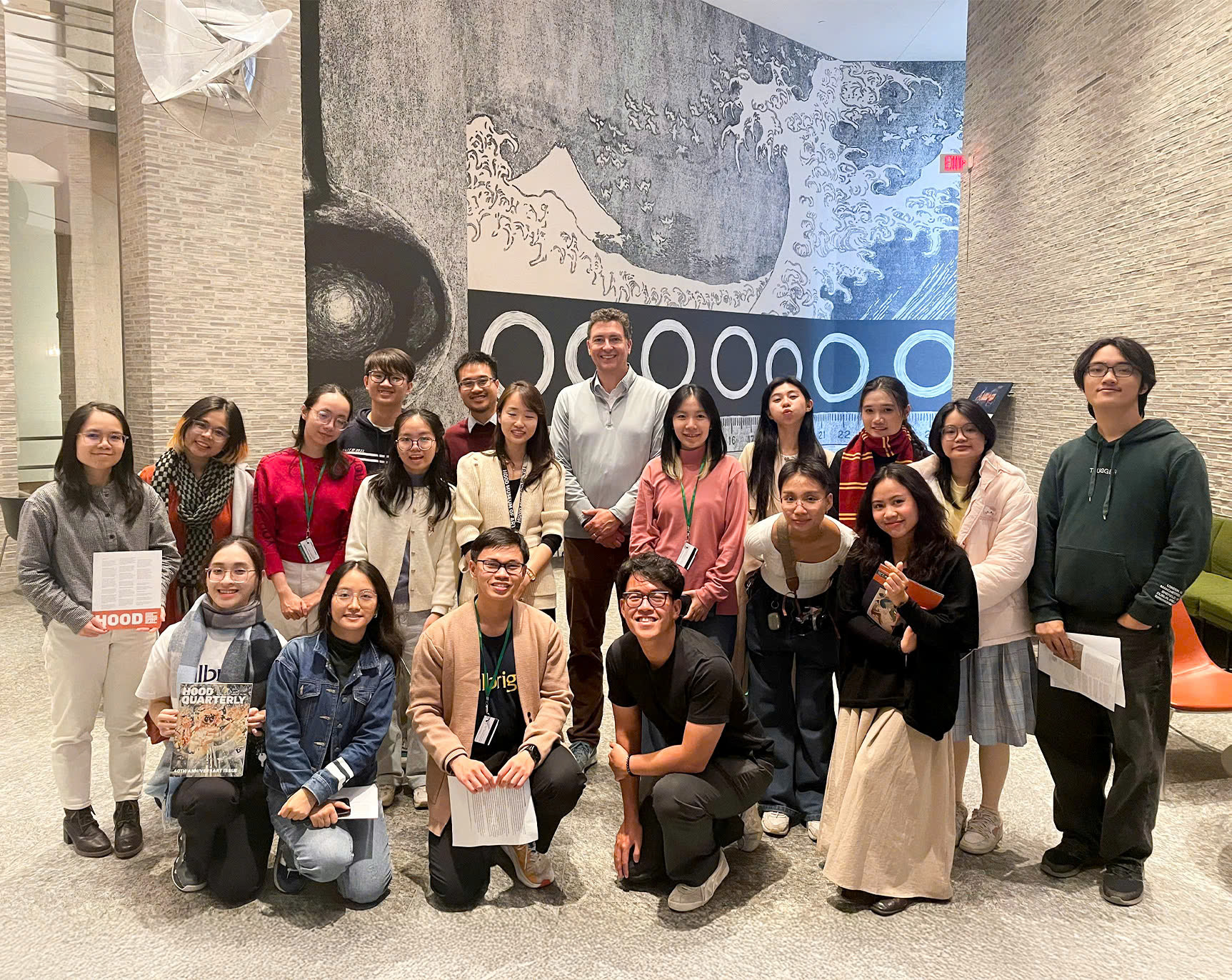
Students from the Developing Vietnam class captured a group moment at the Hood Museum.
Seeing Vietnam in the wider world
Amid the crisp autumn air and vibrant foliage of New England, Fulbright University Vietnam’s students had the opportunity to visit several renowned Ivy League universities, including Dartmouth College, Brown University, Massachusetts Institute of Technology (MIT) and Harvard University.
“My first impression was that many U.S. universities feel as large as small towns, with different academic areas and even their own bookstores and gift shops. Through firsthand experiences, especially conversations with faculty and students in the Vietnamese language programs at Brown University and Harvard University, I was truly moved by their enthusiasm and the genuine love they have for the Vietnamese language. It was inspiring to see their dedication to sharing the beauty of Vietnamese culture with the world,” shared Xuan Nhien, a History major.
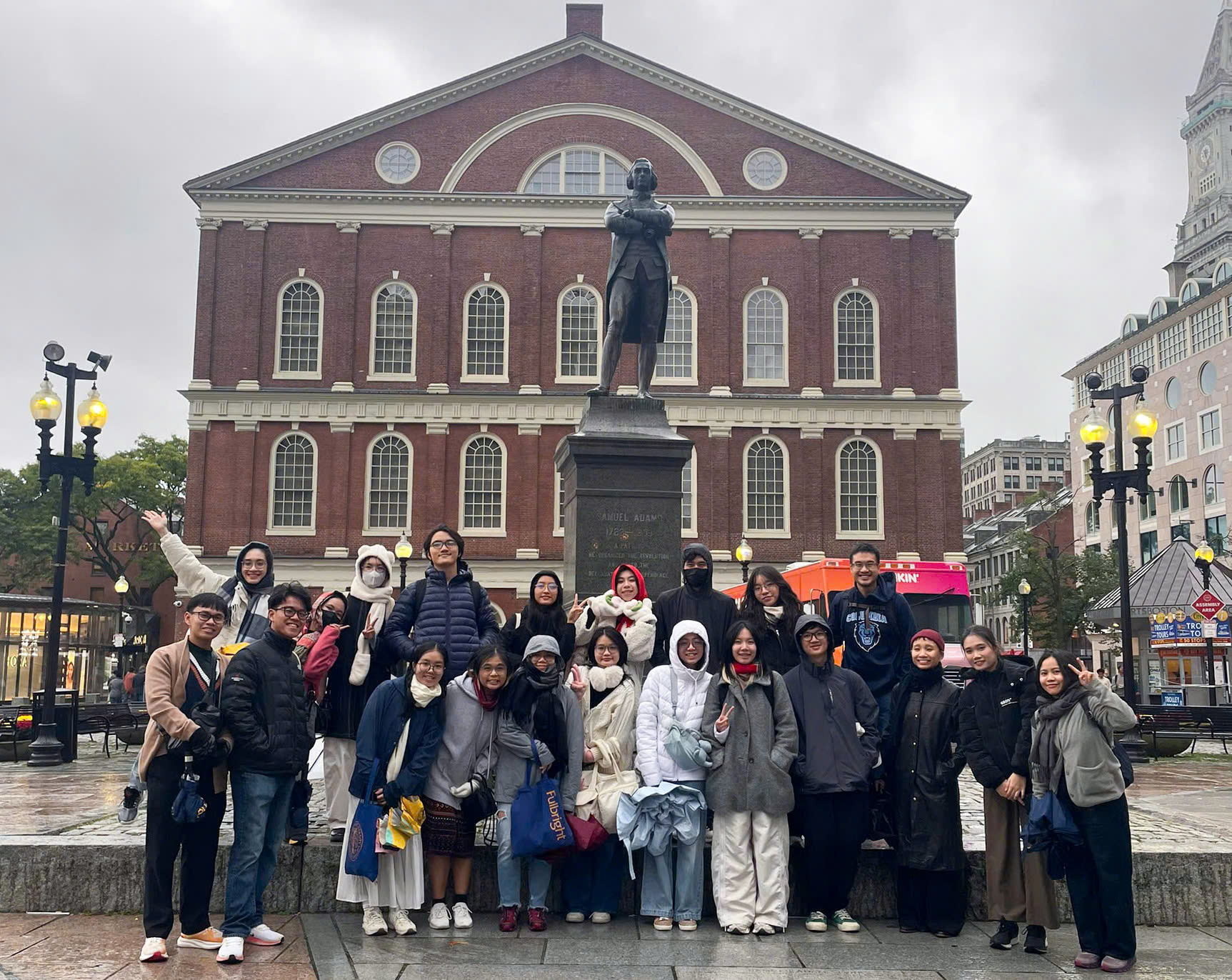
Fulbright students and faculty also visited the historic Parker House Hotel, where President Ho Chi Minh once worked in his youth, and stopped by Dorchester, the vibrant Vietnamese neighborhood in Boston.
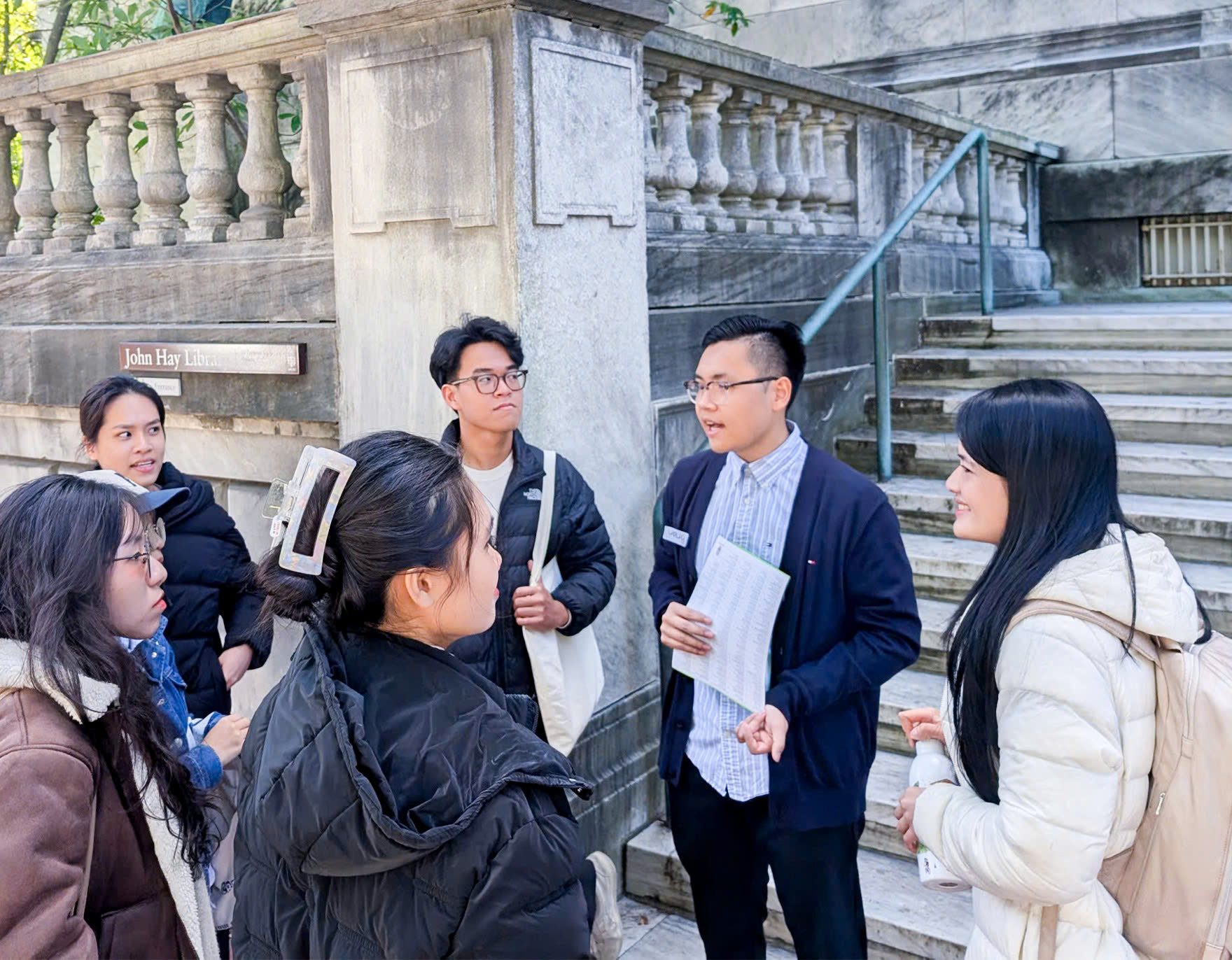
Fulbright University Vietnam’s students visiting Brown University, U.S.
Tóc Tiên, an Art and Media Studies student, shared: “This experience helped me see Vietnam’s development more clearly: steady, resilient, and deeply rooted. It made me even more proud of where we come from and inspired me to continue exploring different layers of our history and culture through art and imagery. For me, art is a way to listen, record, and interpret Vietnam’s growth in the meaningful way.”
Alongside academic exchanges, the students immersed themselves in the cultural landscape of the region by visiting major art institutions such as the Museum of Fine Arts, Boston, and the Hood Museum of Art at Dartmouth College – home to iconic works spanning centuries of global artistic heritage.
Xuan Nhien recalled: “The Museum of Fine Arts in Boston is the most beautiful, diverse, and fascinating museum I’ve ever visited. My only regret is not having enough time to see everything, because it felt like every ancient, medieval, and modern civilization was represented under one roof. And I even got to fulfill a childhood dream: seeing an Egyptian mummy up close and taking a photo with it.”
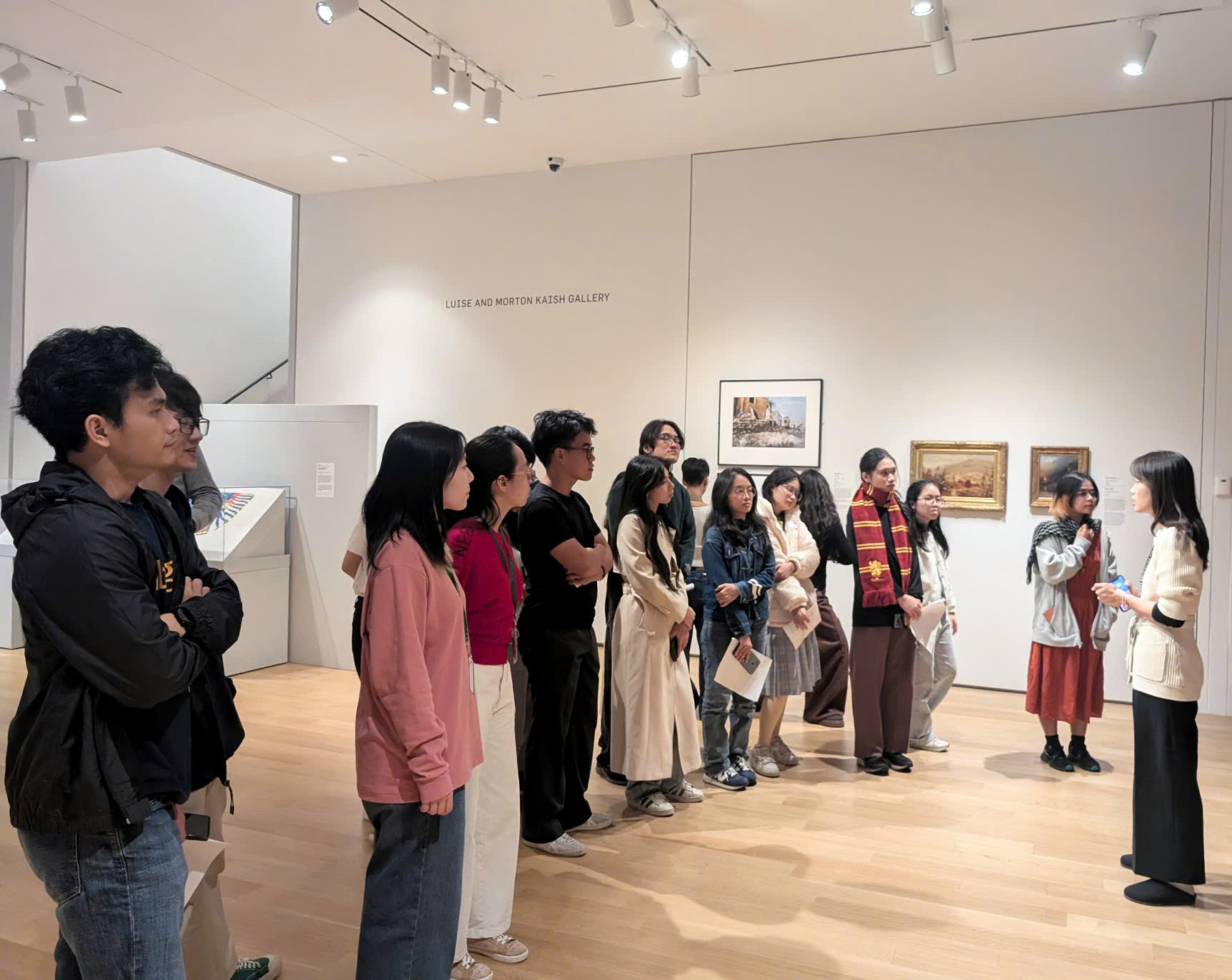
Students from the Developing Vietnam class listening to a guided tour of artworks at the Hood Museum.
These experiences not only broadened their understanding of global culture, art, and history, but also sparked curiosity, connection, and a continuous desire to learn – values at the heart of the Fulbright University Vietnam educational journey.
Inspiration to contribute to Vietnam
Both the field trip and the Developing Vietnam course offered students the opportunity to explore contemporary Vietnam through multiple interdisciplinary lenses from history, urban studies, environment, and religion to culture. The course deepens students’ understanding of Vietnam’s development within a global context, helping them recognize that the country’s story is not solely defined by economic indicators, but also by its people, social values, and cultural identity. Through connecting insights across disciplines, Fulbright students gradually cultivate the aspiration to apply their strengths in ways that contribute meaningfully to their communities and the country.
Trung Kien, an Economics major, shared: “As an Economics student, this course allowed me to ‘collect’ new pieces of knowledge about geopolitics, culture, and other important factors shaping Vietnam’s policies and development trajectory – far beyond purely economic aspects. After the course, I hope to pursue academic research with practical significance, contributing to Vietnam’s sustainable development, especially in finance and education.”
Minh Tuan, a double major in Applied Mathematics and Computer Science, shared: “Coming from a STEM background, my studies often focus heavily on technical knowledge, while I have fewer opportunities to engage with social or human-centered perspectives. Surprisingly, the topics covered in Developing Vietnam course which I initially thought were unrelated to my field, turned out to be deeply connected. Through the lectures, I realized that scientific and technological advancements, despite their benefits, can also lead to complex social impacts. This more cautious, holistic understanding has helped shape the way I think, define problems, and strive to create technological solutions that are genuinely meaningful to society.”
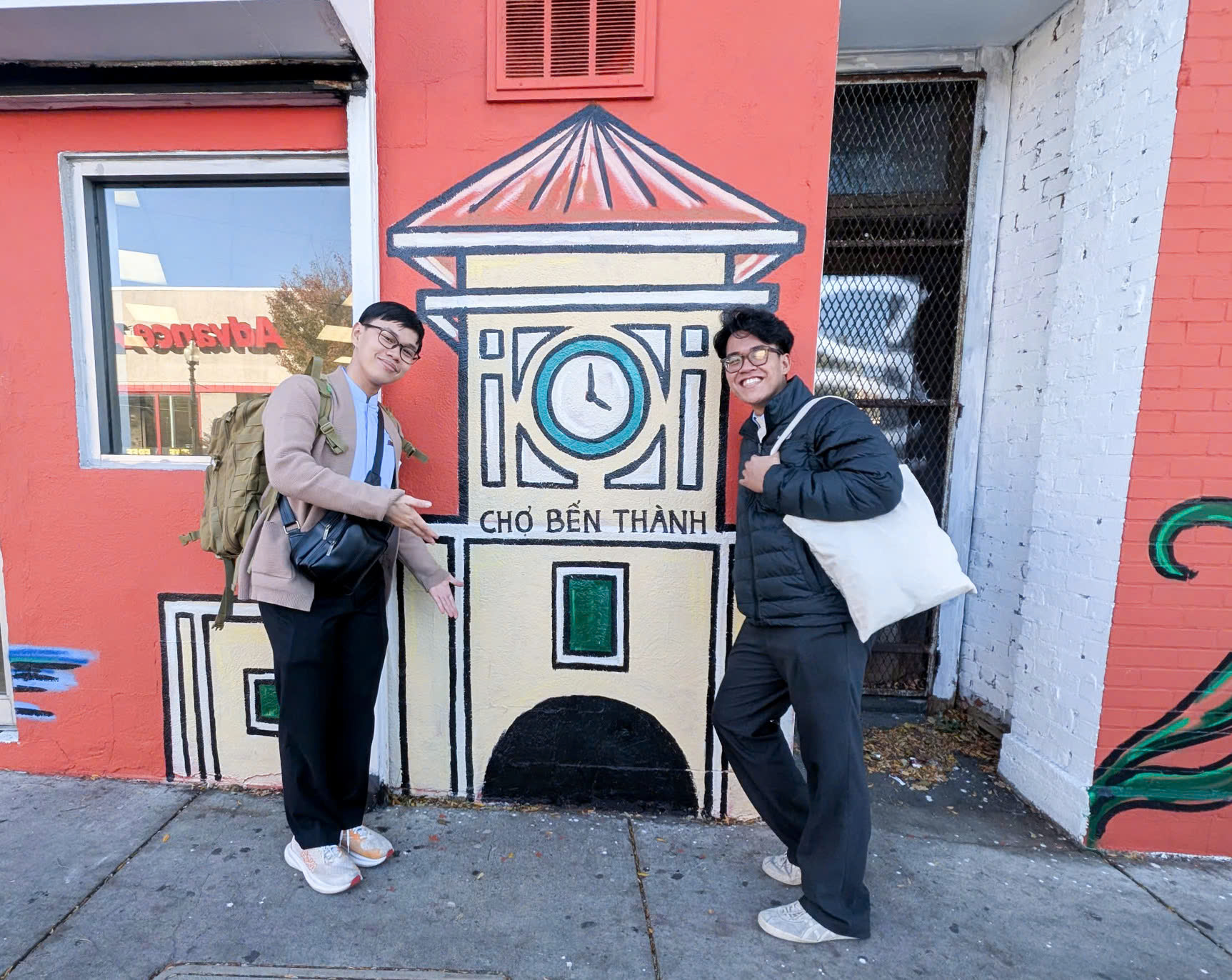
Students from the Developing Vietnam class taking photo in Dorchester, the Vietnamese neighborhood in Boston.
Xuan Nhien added: “Beyond wanting to contribute to society, I also hope to give back to Fulbright University Vietnam – a place that has given me so many opportunities to learn and grow. During the trip, I observed how alumni communities at U.S. universities play an essential role in building, sustaining, and preserving their institutions over generations. That inspired me to think about how I, too, might one day support Fulbright’s growth, helping it become a lasting institution that continues to educate future generations who can contribute meaningfully to Vietnam’s development.”
The annual Developing Vietnam field journey offers students more than a blend of academic theory and real-world insight; it fosters a sense of responsibility toward community and country. For Fulbright University Vietnam, this reflects the core purpose of education: cultivating multidimensional thinking and equipping students with interdisciplinary knowledge that supports Vietnam’s sustainable development.
Phương Anh