

As artificial intelligence (AI) becomes the most intensively discussed field of this decade and quite possibly of several decades to come (thanks to its extraordinary pace of development), the most important question for individuals is no longer “Where is AI going?” as many macro-level analyses tend to ask. Instead, the more pressing question is: How will people adapt in a labor market that is already undergoing, and will continue to undergo, profound transformation?
Understanding the principle that technology changes jobs, but education changes people, Fulbright University Vietnam presents this analysis featuring expert perspectives on the future of work in the age of AI.
The AI Economy and The Workforce Challenge
According to a study by McKinsey Global Institute, if global adoption and effective use of AI reach the average level assumed in its simulations, AI could generate an additional US$13 trillion in economic activity by 2030, which is equivalent to 16% cumulative GDP growth or approximately 1.2% annual growth. This impact is driven by two forces: automation replacing part of human labor, and rapid innovation in products and services.
The same study projects that around 70% of companies worldwide will have adopted at least one AI technology by 2030. However, fewer than half of them are expected to fully absorb and exploit core AI capabilities. A separate analysis in Forbes describes AI as having the potential to become one of the most disruptive technologies ever developed, with far-reaching implications across the global economy.
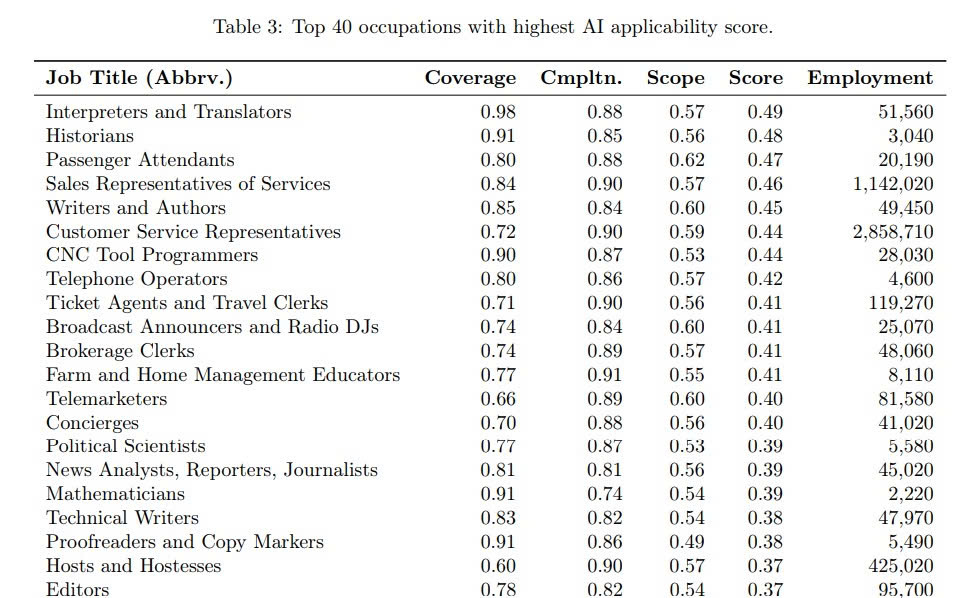
Part of the list of the 40 occupations most vulnerable to AI, according to Microsoft’s research. – Photo: Microsoft
Beyond macroeconomic forecasts, a more practical question emerges for individuals: How should employees prepare for the age of AI? A Microsoft’s research indicates that many white-collar professions such as translators, interpreters, historians, and telemarketers will face particularly high exposure to automation risks. By contrast, occupations that rely heavily on physical labor, including roofers, loggers, and dredge operators are currently considered far less vulnerable, as their work depends heavily on physical skills, real-world environments, and situational judgment.
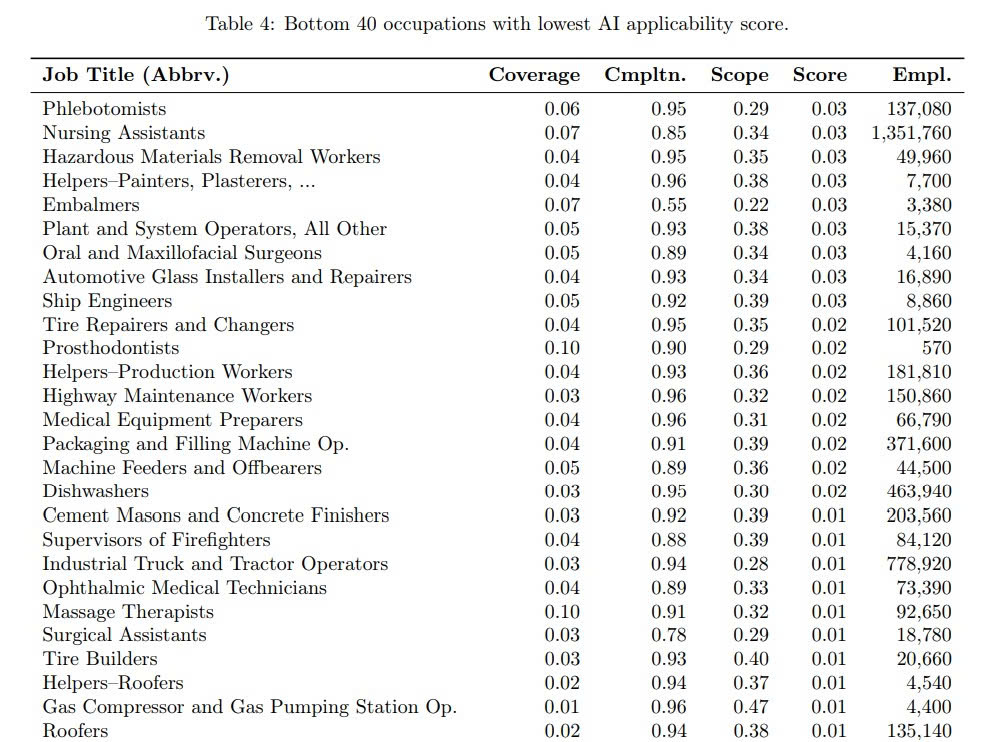
Occupations considered least vulnerable to AI, according to Microsoft.
In light of such dramatic shifts, the most consequential question is no longer which career to choose, but rather what skills we (and future generations) must equip to remain adaptable in a rapidly changing labor market. From this perspective, Fulbright University Vietnam presents expert insights from specialists in AI and social policy to contribute to that answer.
Education: The Key to Unlocking an Unstable Future
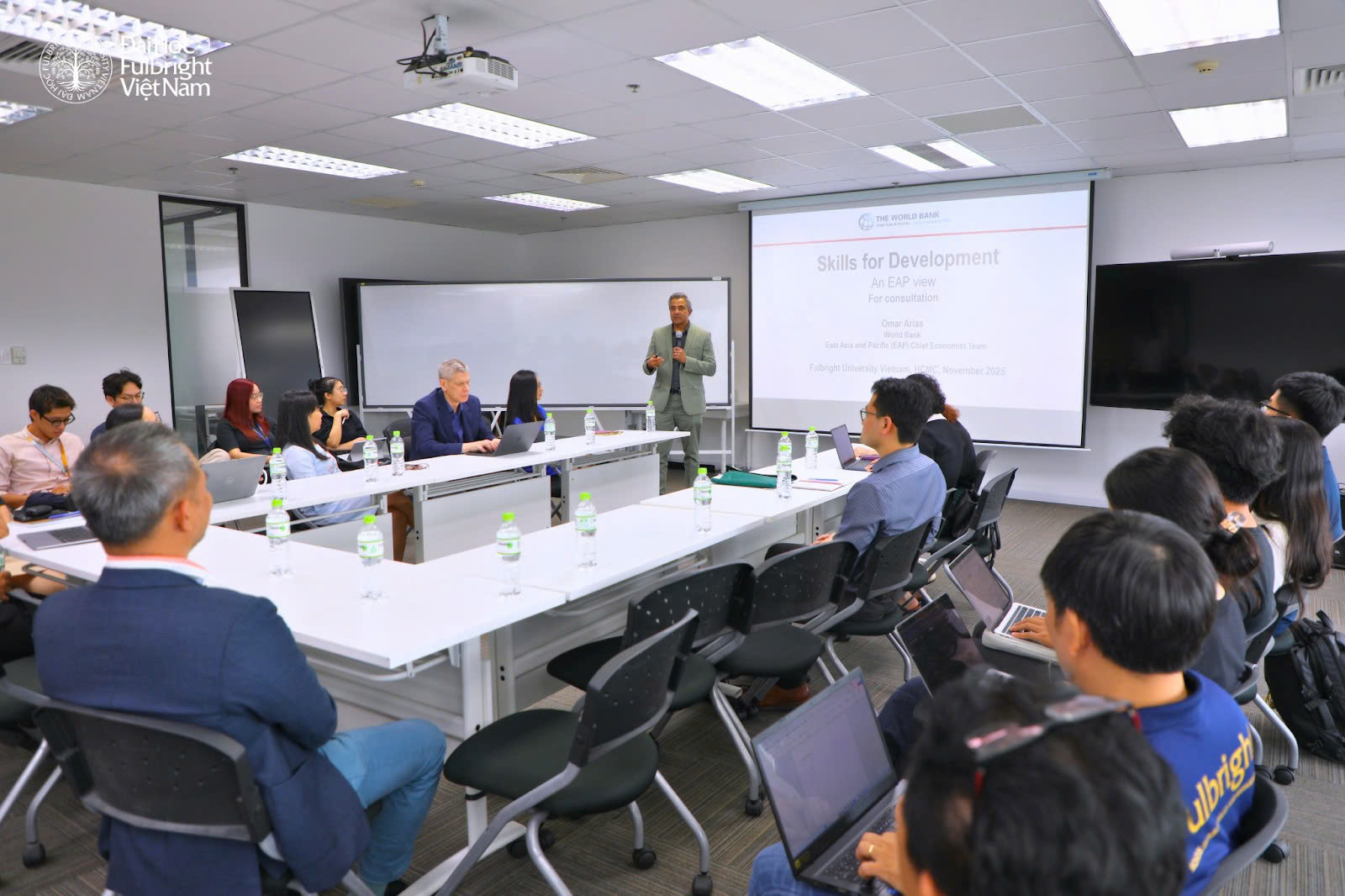
Omar Arias at Fulbright–World Bank Dialogue on Jobs, Skills, and High-Tech Futures in East Asia and Viet Nam” discussion. Image: Fulbright University Vietnam
“If there is one biggest lesson from the wave of AI and semiconductors, it is that no nation can compete in this sector with an outdated education system,” as noted by Professor Omar Arias, Deputy Chief Economist in the World Bank East Asia and Pacific region. According to him, simply teaching students skills A, B, and C will not be enough; a nation must build a synchronized ecosystem where education, businesses, and policymakers collaborate and operate as a unified entity if the workforce is to remain resilient in a rapidly changing and frequently volatile market.
According to the report Strengthening High-tech Workforce Development to Increase Vietnam’s Competitiveness in Semiconductor Industry conducted by Fulbright University Vietnam, Vietnam currently does not lack personnel, but it severely lacks personnel with sufficient skills to meet the demands of high-tech industries.
Specifically, although Vietnam has about 50,000 semiconductor-related design engineers, 20,000 electrical-electronics engineers, 500,000 technical workers, and nearly one million software engineers, and also possesses a training network of over 400 educational institutions, research institutes, and enterprises across the three regions, the majority of them are still only working in assembly/manufacturing and basic design stages.
Meanwhile, positions crucial to the “soul of technology,” such as Chip Architects, System Architects, or Analog IC Design Specialists, remain extremely scarce. Many domestic training programs still lack in-depth content on modern semiconductors, ranging from microchip design to system architecture and advanced testing.
This is also the finding of Professor Omar Arias, as he believes that merely equipping young people with skills is insufficient; a “synchronized coordination system” is needed.
Specifically, universities and educational institutions, including Fulbright University Vietnam, need to “coordinate closely with the business sector to clearly understand the needs of each profession, thereby ensuring that training programs truly equip students with the necessary skills,” Mr. Arias stated at the “Fulbright–World Bank Dialogue on Jobs, Skills, and High-Tech Futures in East Asia and Viet Nam” discussion.
In May this year, the International Labour Organization (ILO) projected that US tariff-related tensions could disrupt up to 56 million jobs (and their incomes) in the Asia-Pacific region in 2025. Furthermore, according to the Future of Jobs Report 2025 by the World Economic Forum (WEF), an additional 170 million new jobs will be created between now and 2030, but simultaneously, about 92 million existing jobs will disappear, primarily due to geopolitical instability and the “too fast, too hot” development of technology in general and Artificial Intelligence (AI) in particular.
This scenario is further illustrated in the document series Future Jobs: Robots, Artificial Intelligence, and Digital Platforms in East Asia and Pacific, co-authored by Mr. Omar Arias (along with Daisuke Fukuzawa, Duong Trung Le, and Aaditya Mattoo, published by the World Bank).
In this series, the declining birth rate and population aging are posing a risk of labor productivity decline in the Asia-Pacific region. This leads investors and employers to increasingly adopt technology and AI to save costs and compensate for productivity shortfalls. Consequently, workers need to upgrade their skill sets to utilize these very new tools if they wish to avoid unemployment. In countries like Vietnam, the challenge of upskilling the workforce becomes even more urgent, to avoid being trapped at a low value-added stage.
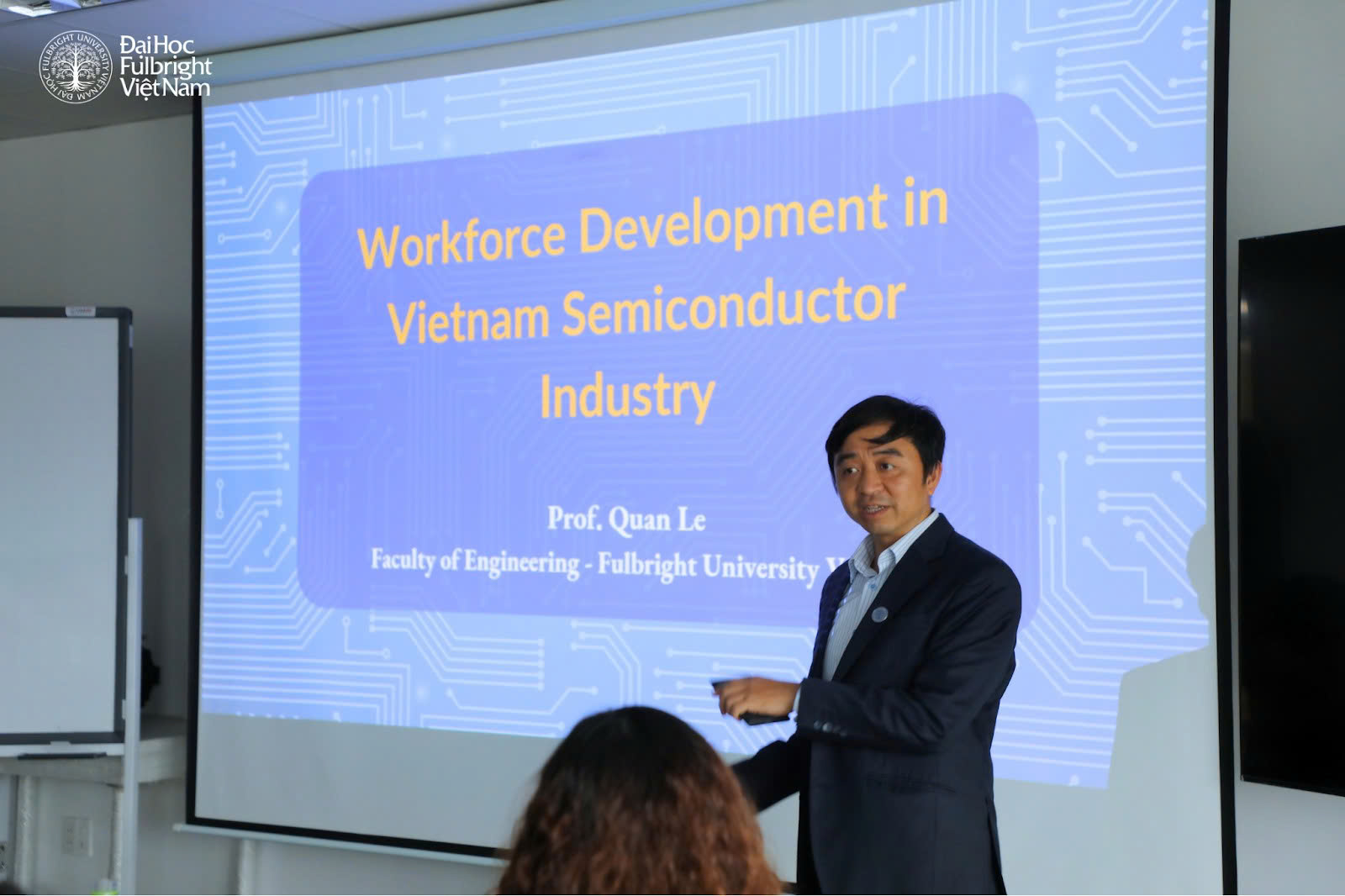
Dr. Le Quan – Image: Fulbright University Vietnam
Also at the seminar, Dr. Le Quan from the AI Institute at Fulbright University Vietnam, presented that the global semiconductor industry is experiencing strong growth and a labor shortage, which opens up significant opportunities for Vietnam due to its abundant workforce of ICT and electrical & electronics engineers.
Vietnam has attracted many major corporations in the Assembly, Packaging, and Testing (APT) and Semiconductor Manufacturing Equipment (SME) segments, such as Amkor, Hana Micron, Onsemi, and Intel. These fields create numerous technical jobs and do not require students to have a degree specifically in semiconductors from the outset, as companies provide re-training. The chip design segment is also increasing in demand and offers attractive salaries, but it requires more in-depth training and practical application capabilities.
Humans Remain the Most Crucial Gatekeepers in the Age of AI
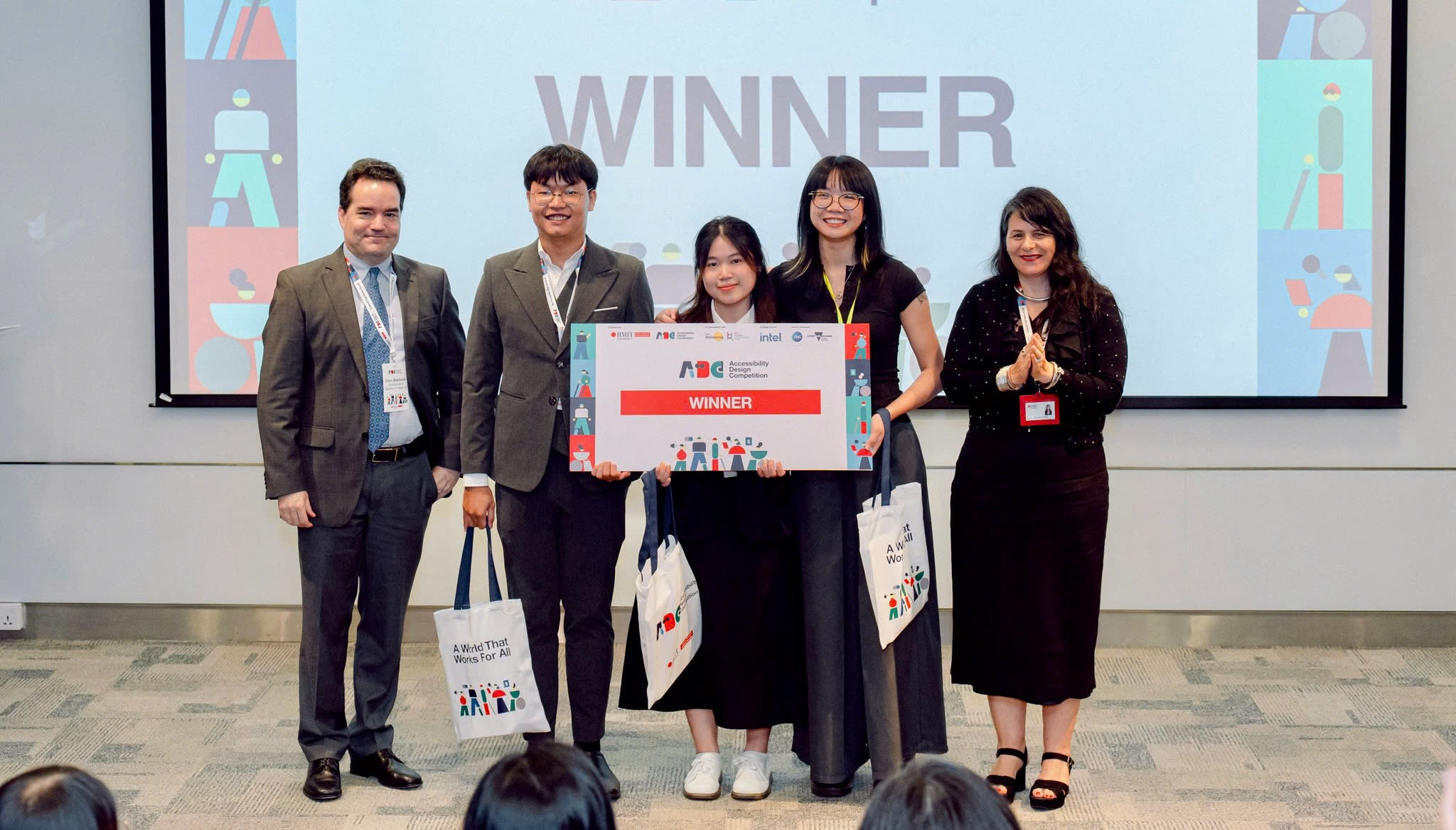
The interdisciplinary project AllStep, representing Fulbright University Vietnam, won First Prize (Champion) at the Accessibility Design Competition (ADC) 2025. – Image: Fulbright University Vietnam
“Young people need to be prepared for the future job market right from their school desks. In my opinion, this future will primarily revolve around Artificial Intelligence (AI) and automation technology,” Geoffrey See shared right from the first few minutes of his presentation at the workshop titled “Preparing for the Future of Work with AI – or How Not to Be Unemployed,” organized by the AI Institute at Fulbright University Vietnam in mid-November.
However, according to the alumnus of Tsinghua, Yale, and Pennsylvania Universities, merely teaching young people how to use AI tools is not enough. They also need to be equipped with the skills to evaluate, assess, interpret situations, and make decisions based on the options provided by the AI.
Explaining further, Geoffrey recounted an event organized by his team in Philadelphia while he was studying at the Wharton School of Business at the University of Pennsylvania: “NASA sent a probe to the moon, but it was knocked off course mid-way, so how do we rescue it and bring it back to Earth?” he recalled.
According to Geoffrey, the participants were not NASA engineers; none had expertise in rocket science or aerospace technology. Each person simply tried to offer a solution based on their own understanding and knowledge. Geoffrey recorded all the answers and finally realized: “These were all the solutions that NASA had already tried,” he stated. “And this is absolutely wonderful when we can solve so many problems thanks to collective intelligence and knowledge,” he concluded.
However, he emphasized that the “real challenge” lies in figuring out how to find the most effective solution “among 20, 30, or even 50 proposals,” similar to what AI LLM tools (ChatGPT, Grok, Gemini, etc.) provide us today: a long list of plausible options, but the AI itself cannot make the final decision for humans.
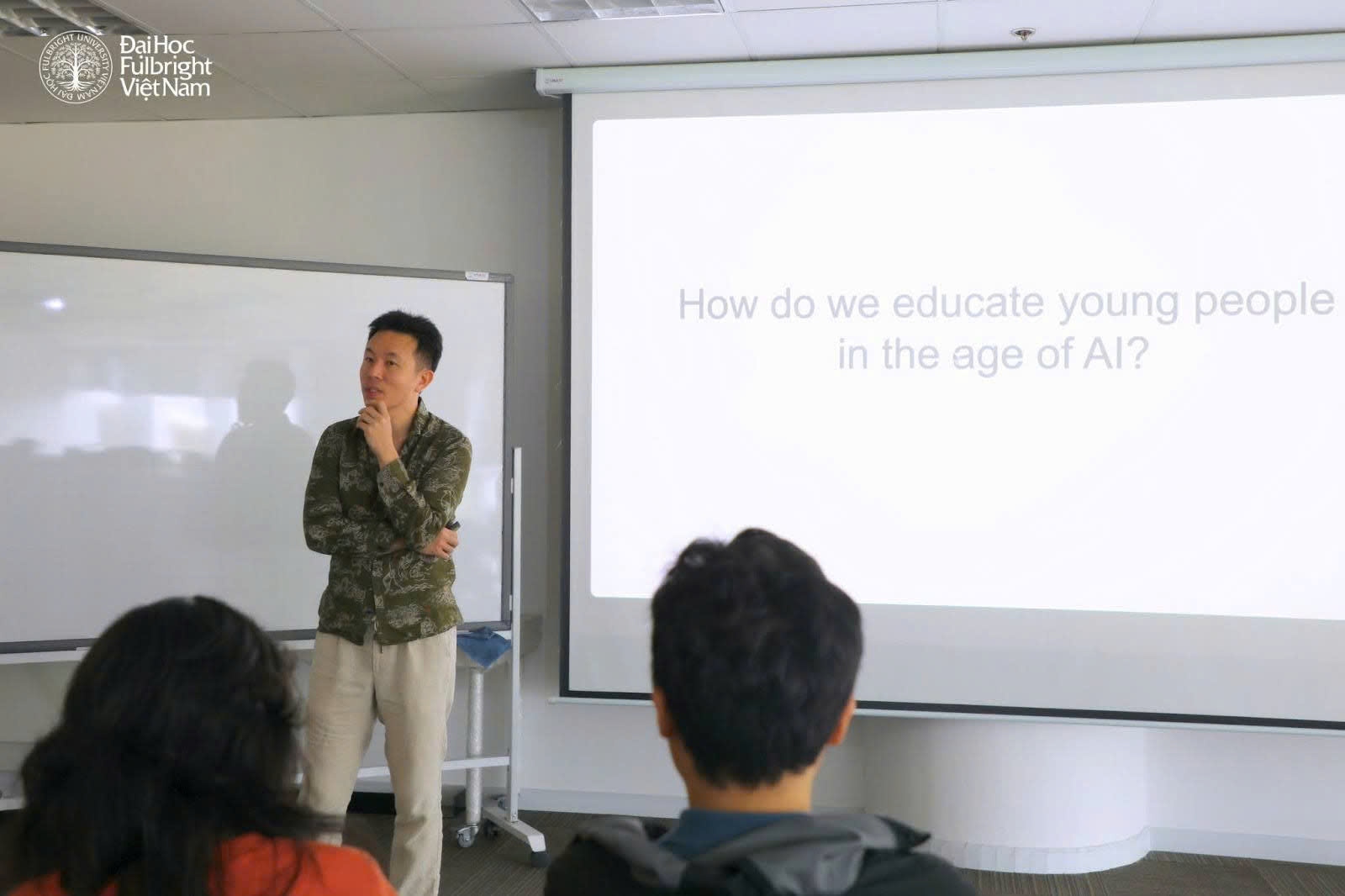
Geoffrey See sharing at Fulbright University Vietnam. – Image: Fulbright University Vietnam
“We need a specific set of skills to know which option to choose, also known as context engineering,” Geoffrey concluded. From the Philadelphia example, it can be seen that having information and knowing how to use that information are two completely different skill sets.
Amidst such an “unstable” landscape, the educational orientation and philosophy of Fulbright University Vietnam remain consistent: an interdisciplinary and holistic educational mindset that helps students adapt flexibly to all future changes.
According to Mr. Christopher Abrams, Vice President for Operations and Development at Fulbright University Vietnam, in an increasingly holistic and complex world, students should not be limited to a narrow specialization. “Even as an economist, you still need to understand a bit of an engineer’s knowledge. Conversely, as an engineer, you need a bit of economic thinking. The ability to look at a problem from multiple perspectives is the core competence that the younger generation needs to possess, and that is why Fulbright University Vietnam pursues an interdisciplinary and holistic education model,” he shared.