
“We could not contain our surprise and burst into cheers as we witnessed the Metro travel from Ba Son station to see the train emerge against a bright sky as it headed towards Van Thanh Park station. That beautiful transitional scene was the most memorable moment for me during this visit.”
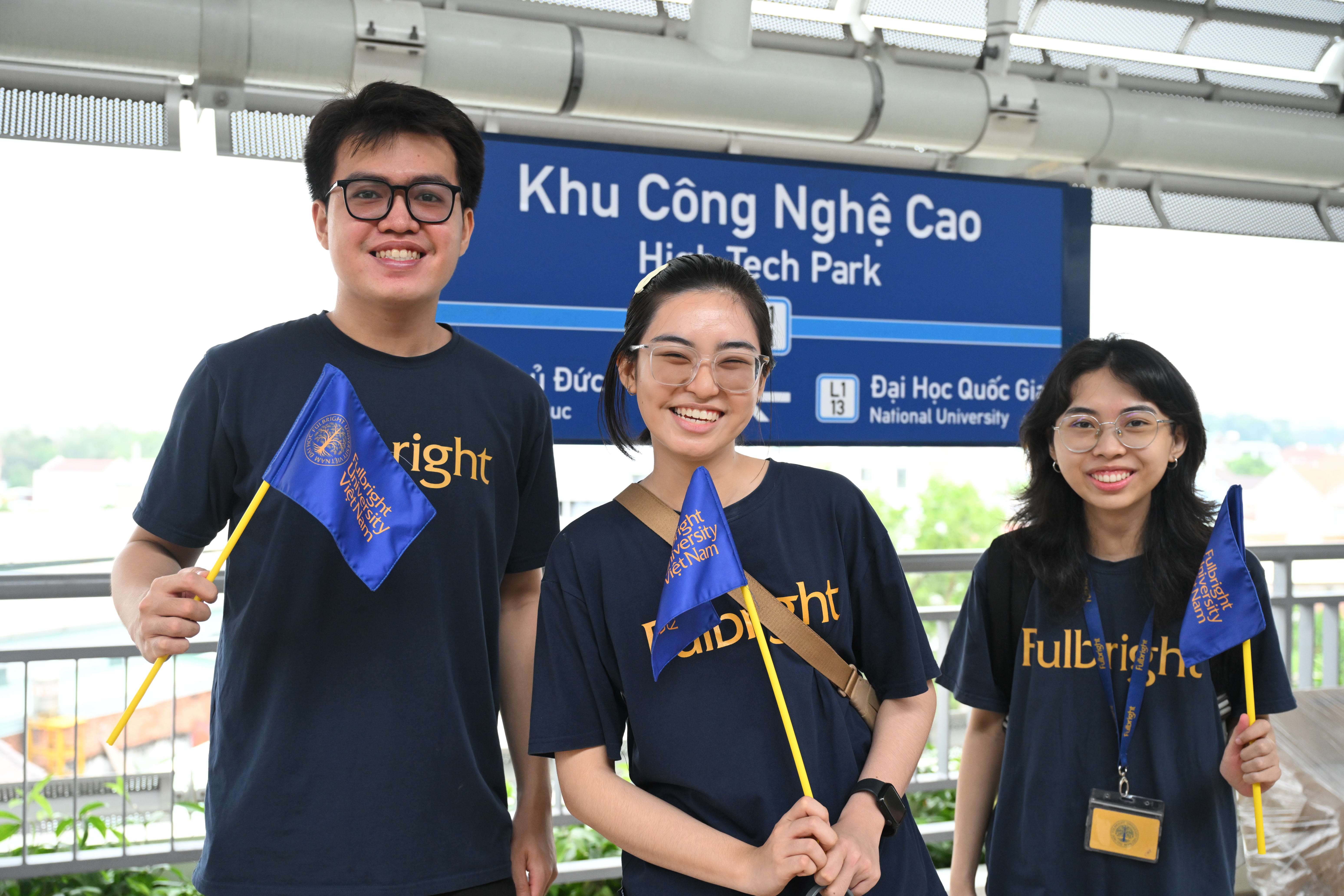
This was the sentiment shared by Tran Phuong Anh, a second-year Economics student at Fulbright University Vietnam, about the field trip to Metro Line 1—the most modern urban transport in Ho Chi Minh City (HCMC)—with staff, faculty, and students from Fulbright on December 15, 2024.
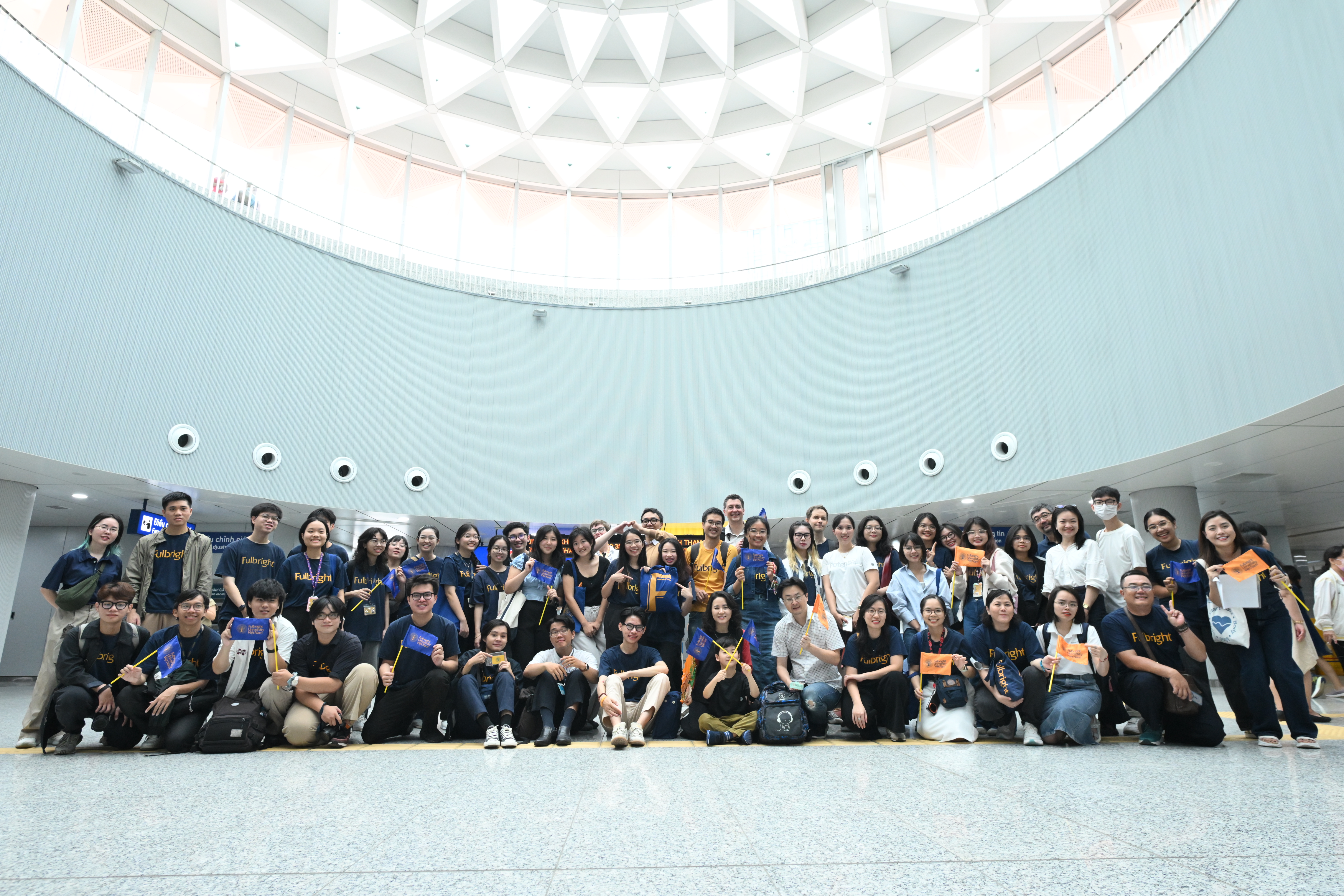
The staff and faculty, along with the students from Fulbright, were eager to explore the stations of Metro Line 1.
The entire line includes a total of 14 stations, prominently featuring three underground stations: Ben Thanh, City Opera House, and Ba Son, each showcasing its own distinct architectural style reflecting its name. The students were in awe as they admired the City Opera House station’s classic architecture combined with timeless minimalist lines, highlighted by a ceiling adorned with luxurious patterns, and were astonished by the modernity of Ba Son station with its intricate arches built to last. Notably, each station is designed like a miniature city underground with multiple exits leading to different locations and a complex, multi-level structure. This convenience reaffirms the efficiency aimed at meeting the needs of the people, making the Metro a symbol of a modern, dynamic, and sustainable HCMC.
Reflecting on the cultural aspects through the architectural design of the underground stations, Ha Thi Thao My, a second-year Social Studies student, shared: “Each station embodies the local cultural values, despite being adorned with modern interiors. This makes me think of a future when the Metro helps to spread the unique characteristics of Ho Chi Minh City to a wide array of foreign visitors. Moreover, the infrastructure and operational equipment at the stations are very user-friendly for all age groups and social conditions, particularly optimizing services for vulnerable groups.”
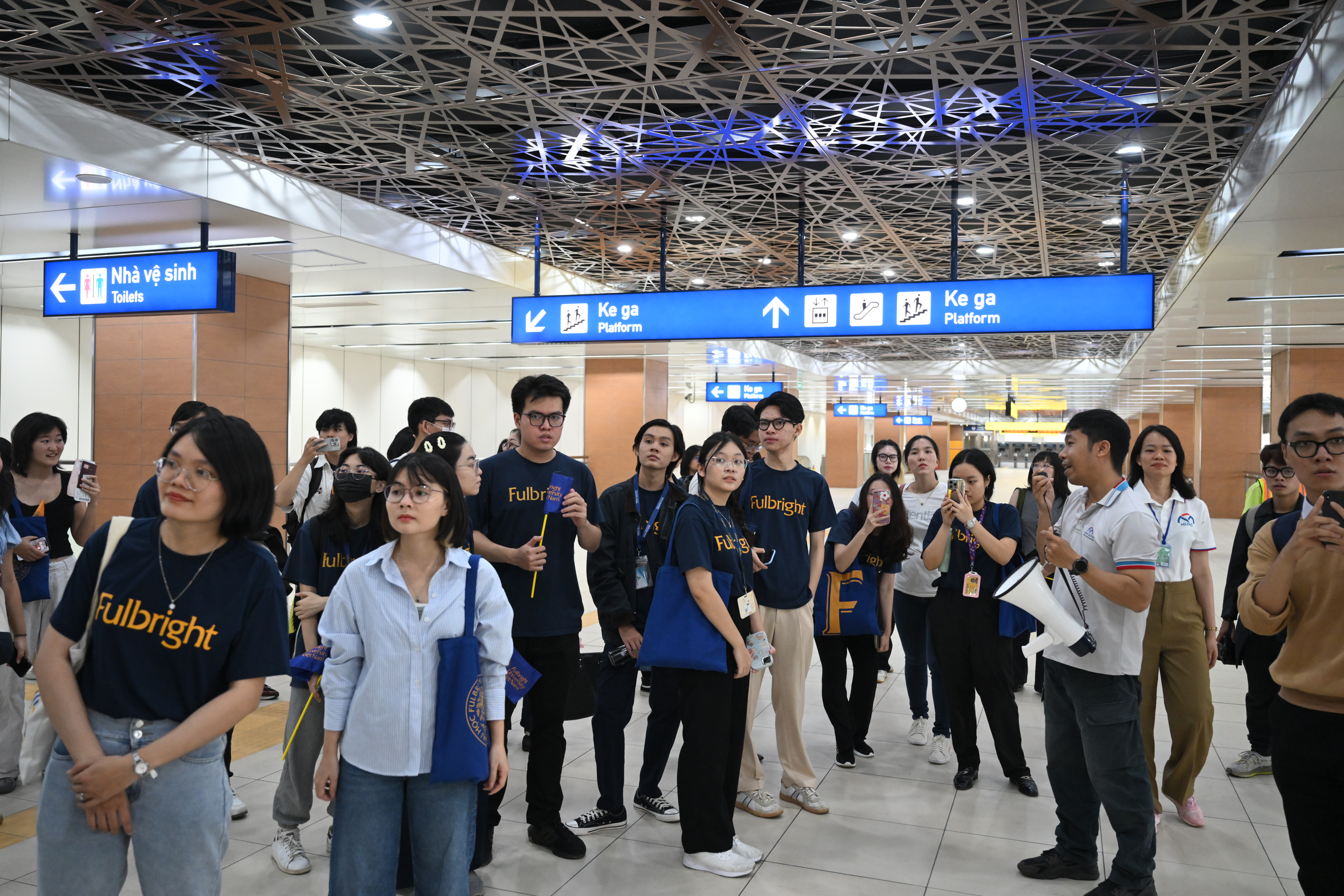
The Fulbright community couldn’t help but marvel at the modern yet luxurious and classic architecture of the City Opera House station.
Seeing his hometown from above, first-year student Tran Tien Loi felt deeply moved and surprised. To Loi, Metro Line 1 has nurtured his belief in the city’s unprecedented economic development in the future: “The opportunity to experience Metro Line 1 has made me realize the tremendous benefits that public transportation will have on the economy as well as the living environment of the people in HCMC. The usual stress of traveling through the traffic hubs in the eastern gateway seems to lessen thanks to the clean, airy, and smooth space that the Metro provides. Additionally, I believe that with the emergence of the Metro 1, economic indicators related to tourism and commerce, especially the traffic volume at the New Eastern Bus Station, will flourish, creating motivation and opportunities for many businesses to develop.”
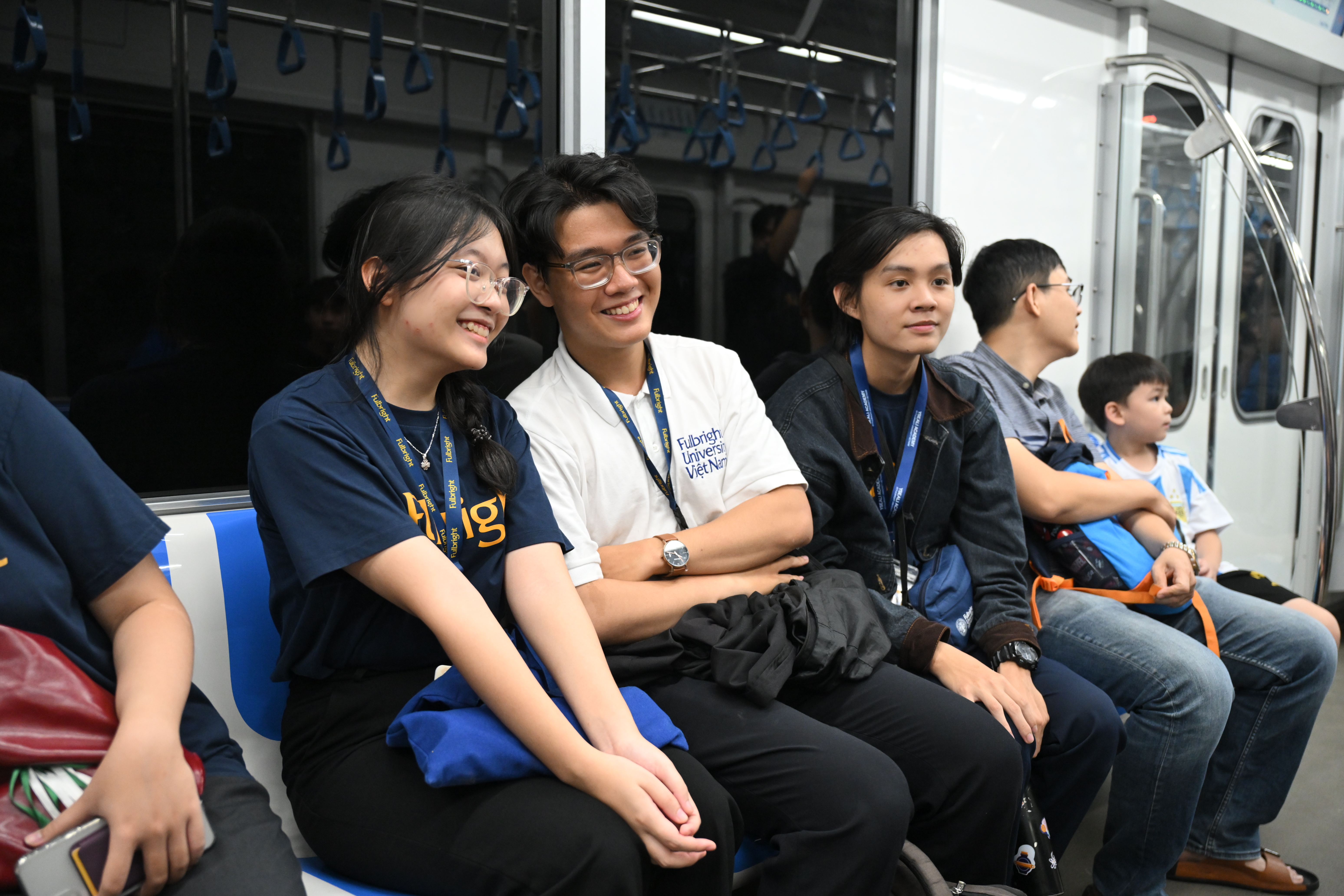
Tien Loi (in a white shirt) joyfully captured memories with friends on Metro Line 1.
As a frequent user of public transport for commuting needs, Ha Nhu Y, a third-year Vietnamese Studies student, expressed her anticipation for daily opportunities to use Metro Line 1: “I really enjoy public transportation due to its positive environmental impacts, such as reducing traffic volume, air pollution, and noise for the city. The most important issue right now, in my opinion, is how to raise public awareness about the benefits that the Metro brings to enhance their accessibility to this relatively new means of transport. Because the emergence of the Metro will not only lead to significant improvements for the city but will also play a role in encouraging a shift in the daily travel habits of most people in Ho Chi Minh City.”
At Fulbright, field trips provide students with the opportunity to learn how to apply the knowledge they’ve gained in the classroom to real-world observations. It also encourages them to share their interdisciplinary perspectives while honing their critical thinking and professional skills. Most importantly, this experience not only provides fascinating insights into the economic, technological, and environmental values that Metro Line 1 brings, but also promises a near future when the Metro becomes the main means of transportation connecting the city center to the Hi-Tech Park, where Fulbright’s official campus will commence operations in 2026.
Nhu Y