
The question of choosing a field of study has always been a battle of concern not only for 12th-grade students but also for parents who must consider many factors: the major must be “hot” – suitable for the individual – yet sustainable enough to last for many years. However, the 4.0 era, with the remarkable advancements and replacements by artificial intelligence (AI) in certain jobs, requires workers to not only excel in one field but also possess multidimensional and interdisciplinary thinking. This raises the question: Is the pressure to choose the right major from the starts still a problem that Gen Z needs to solve as the only option?
Interdisciplinary Studies – A Gateway to Many Opportunities
The demand for high-quality human resources in the digital age has prompted today’s students to not only hone expertise in one area but also continuously explore, and study skills, knowledge in related fields to adapt to the constantly changing world.
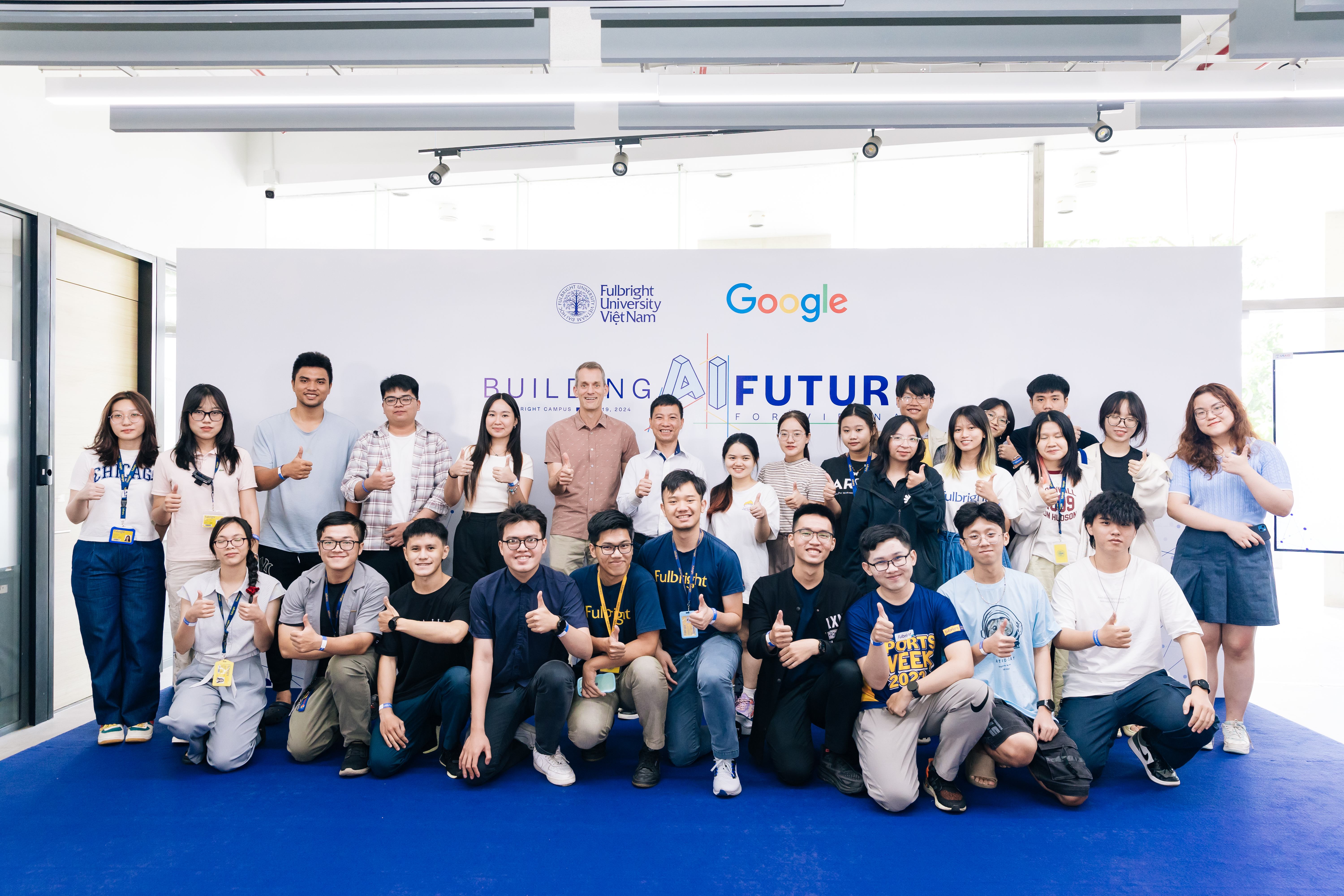
Fulbright University Vietnam students took a commemorative photo with Jeff Dean at the announcement of Google’s $1.5 million grant for Fulbright.
Pursuing interdisciplinary and multidisciplinary education will first allow learners to uncover their potential and develop skills comprehensively. It is challenging to decide what one is passionate about or suited for without real experiences. The interdisciplinary learning method allows students to clearly understand their interests and abilities through studying, practicing, and testing their skills in various real-world applications across different fields. As a result, learners will have the opportunity to develop flexible and multidimensional thinking, identifying what suits them best while integrating knowledge from various areas to “upgrade” their thinking skills from multiple perspectives and quickly adapt to changes.
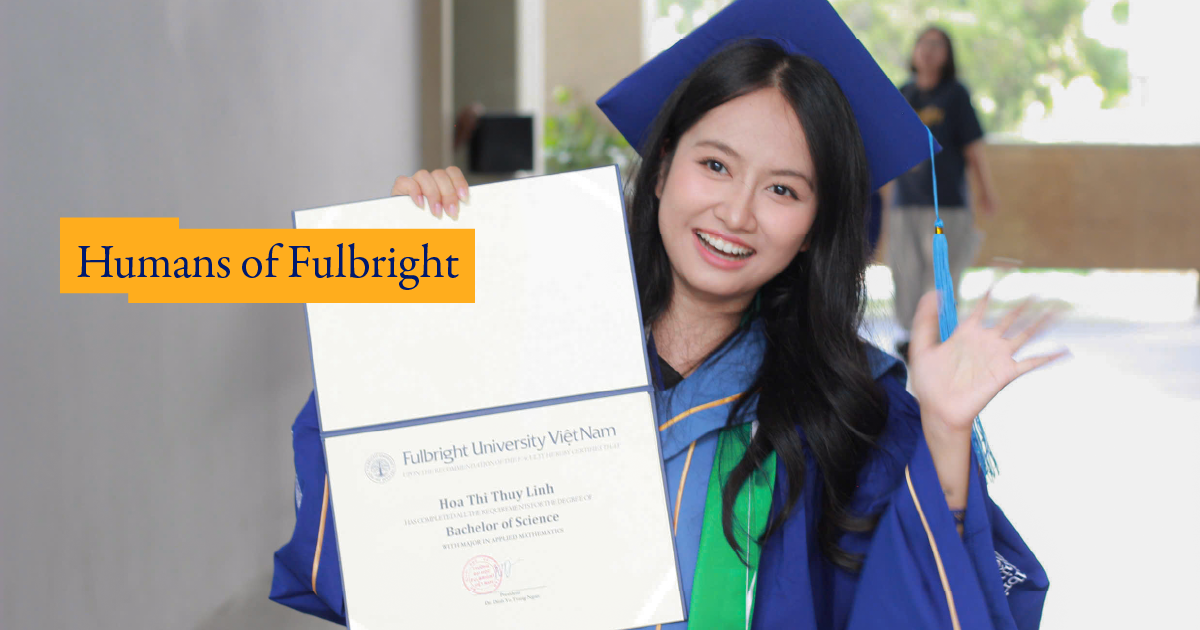
Interdisciplinary education also boosts competitiveness in the job market by equipping learners with transferable skills and the ability to keep up with emerging career trends. A prime example is Nguyen Tuan Minh, an alumnus of Fulbright University Vietnam, who effectively combined knowledge from Computer Science and Economics to work as a Consultant at KPMG—one of the “Big Four” auditing firms in Vietnam. According to Minh, the idea of “working outside one’s field” is now somewhat outdated and unnecessarily restricts learners’ courage. Instead, it helps them adapt and apply their knowledge across diverse job sectors.
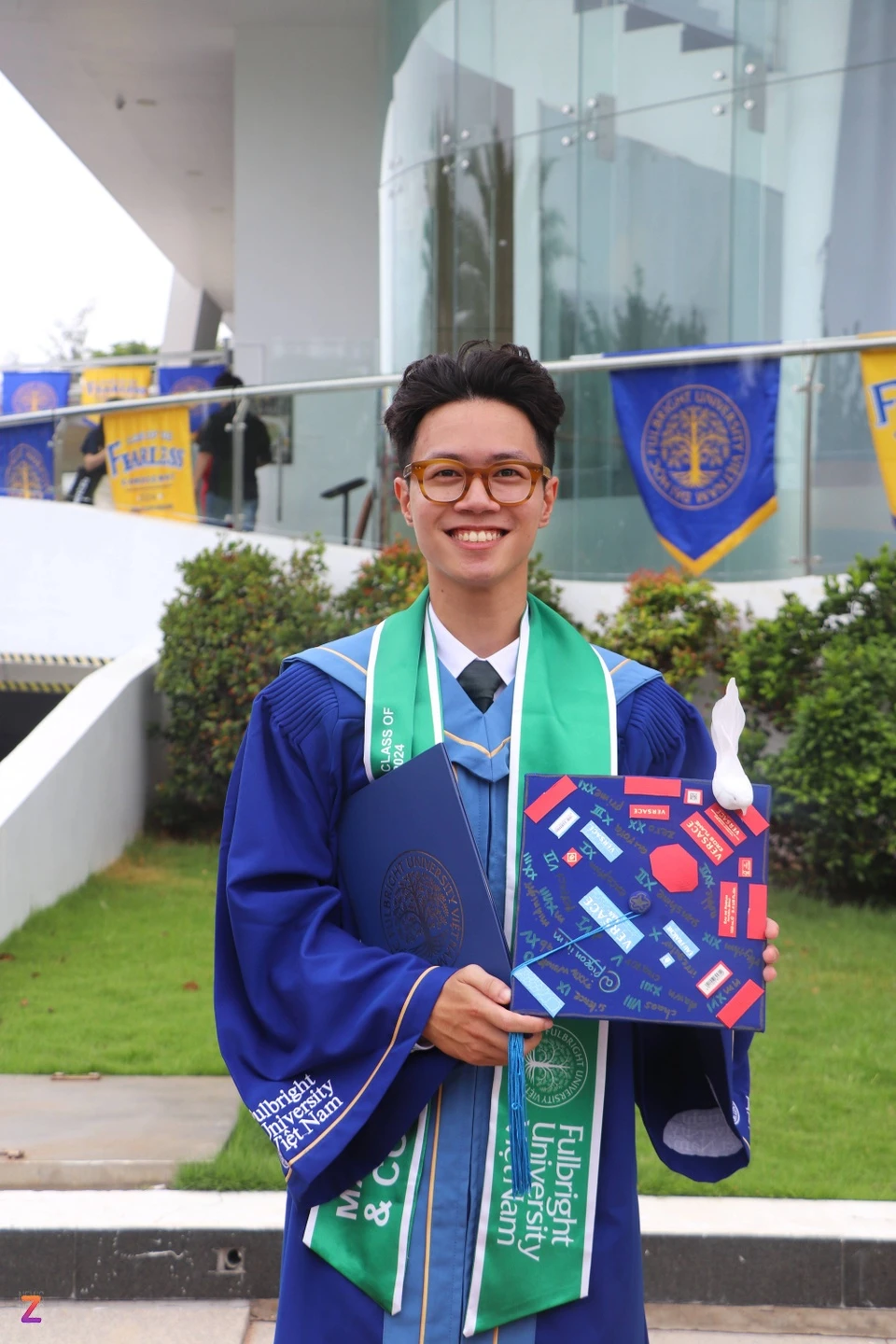
Tuan Minh radiates confidence in his graduation gown at Fulbright University Vietnam.
Interdisciplinary Studies for Societal Contributions
Growing up in an era of pressing global issues, Gen Z is highly aware and eager to contribute solutions. Students with interdisciplinary knowledge have the potential to become global citizens, addressing sustainable solutions for challenges like climate change, social justice, and technology. A prominent example is the Braille Music Project by a group of Fulbright University Vietnam students. They skillfully integrated technology and humanities knowledge to support vulnerable communities, such as the visually impaired, by creating tools to convert traditional music notation into Braille. This initiative allows visually impaired individuals to access and work in the field of music.
Established in 2016, Fulbright University Vietnam is the first nonprofit liberal arts university in Vietnam. Our interdisciplinary teaching approach allows students to explore their interests and experiment before deciding on a major. By offering multidisciplinary programs across Humanities, Social Sciences, Engineering, Mathematics and Computing, Fulbright encourages students to pursue minors or double majors to develop critical thinking, interdisciplinary skills, and creativity, thereby broadening future career opportunities.
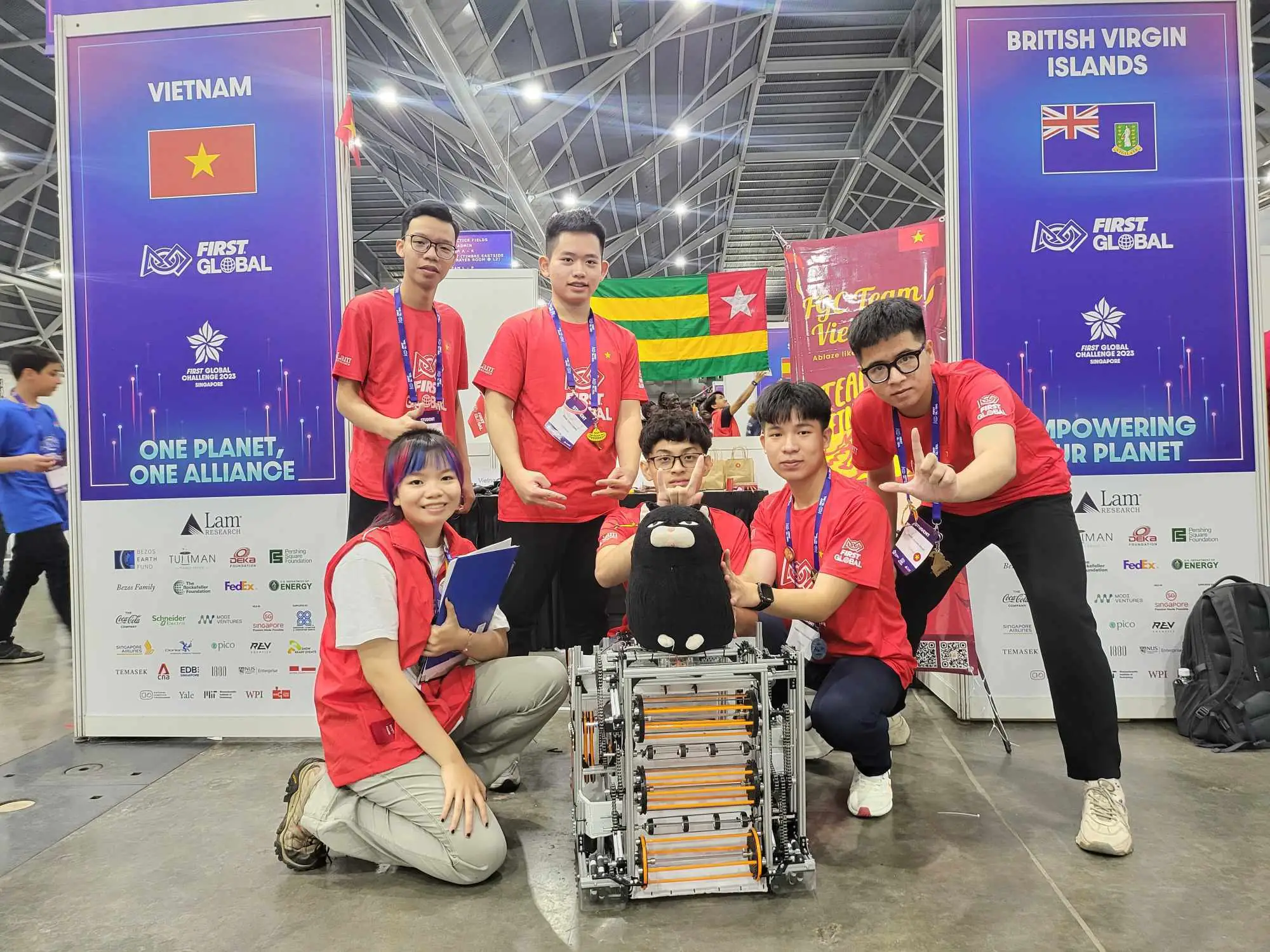
For instance, Tran Thao Nguyen, a Fulbright student who graduated with dual majors in Social Studies and Integrated Sciences, leveraged the interdisciplinary and practical learning approach of liberal arts education at Fulbright to research and address complex global issues. She also pioneered bringing the FIRST® Tech Challenge, one of the longest-running and largest robotics competitions in the U.S., to Vietnam.

Thao Nguyen (left) serving as a Mentor and Award Judge at the FIRST® Global Challenge, Singapore 2023.
In a constantly evolving society and era, confining oneself to a specific field may no longer be suitable. Instead, young people are encouraged to step out of their comfort zones and seek environments that embrace differences. After all, the journey of self-discovery is a lifelong endeavor, not just limited to one’s twenties.
Như Ý