
Premiering in April 2025, on the 50th anniversary of National Reunification Day, Địa Đạo (The Tunnels), a film by director Bùi Thạc Chuyên, has made a remarkable impact—garnering both critical acclaim and box office success, grossing hundreds of billions revenue in a genre often considered niche: the war film. The dream of Địa Đạo had been nurtured for over a decade, proving that making historical films is a long and demanding journey requiring precise reconstruction of settings, compelling storytelling, and significant financial investment. The film also raises profound questions about the role of cinema in reconstructing historical fragments and in examining the complex relationship between war and peace.
In an effort to explore these questions, the Vietnam Studies Center at Fulbright University Vietnam launched a series of events offering young people the opportunity to meet and engage with experts and researchers, to delve into the country’s history, and to discover artistic approaches to reimagining the past.
Địa Đạo: A new future for war film genre in Vietnam
Beneath the basaltic soil of Củ Chi once lay a labyrinthine tunnel network stretching over 200 kilometers, playing a critical role in the Hồ Chí Minh Campaign and contributing significantly to the eventual reunification of the country. In Địa Đạo, director Bùi Thạc Chuyên doesn’t merely depict the brutality and destruction of war—he opens up new pathways for a genre often deemed “unpopular.” While themes of sacrifice and heroic resistance are prominent, the guerrilla fighters in the film are also portrayed with ordinary human traits—sometimes even returning to human instincts.
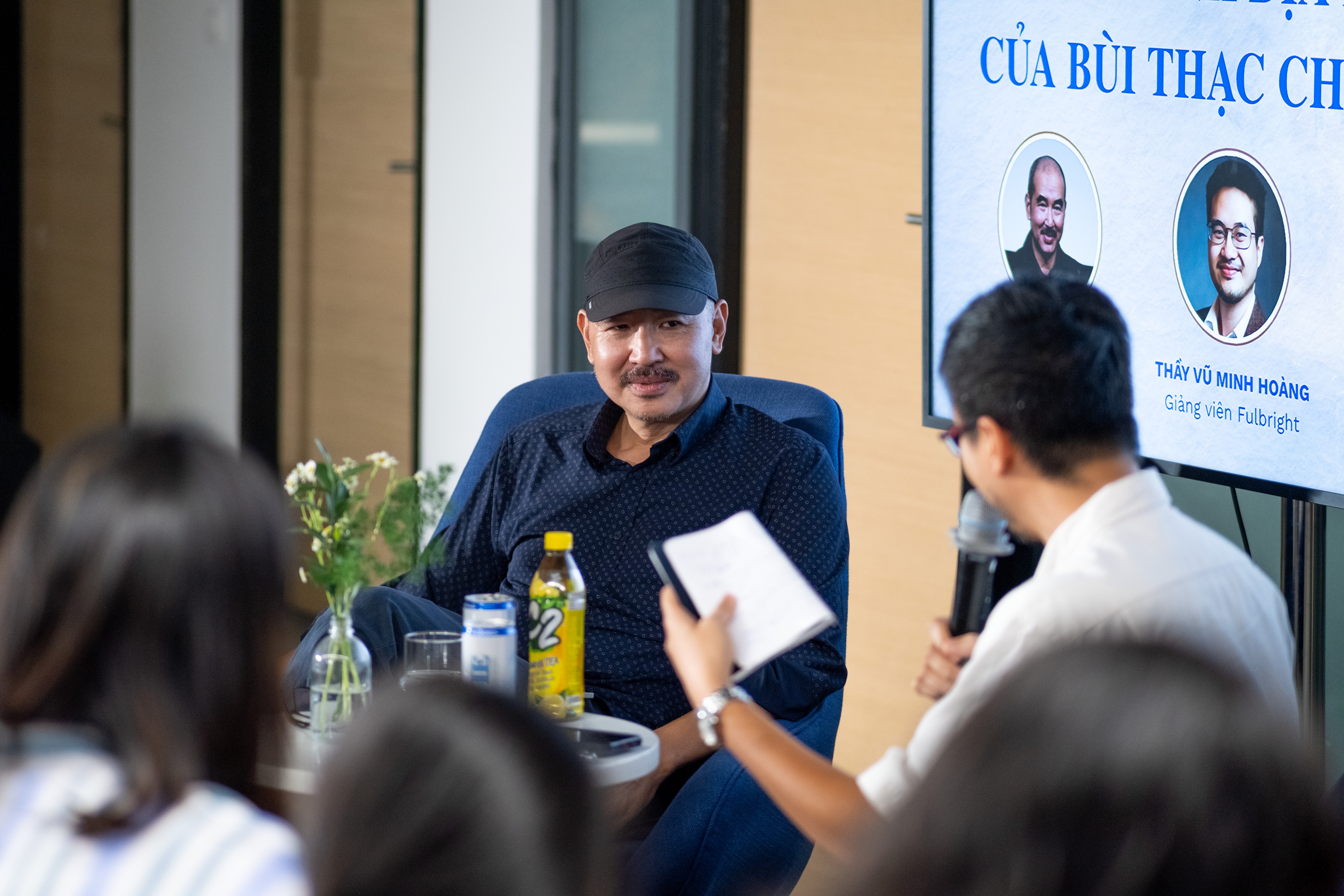
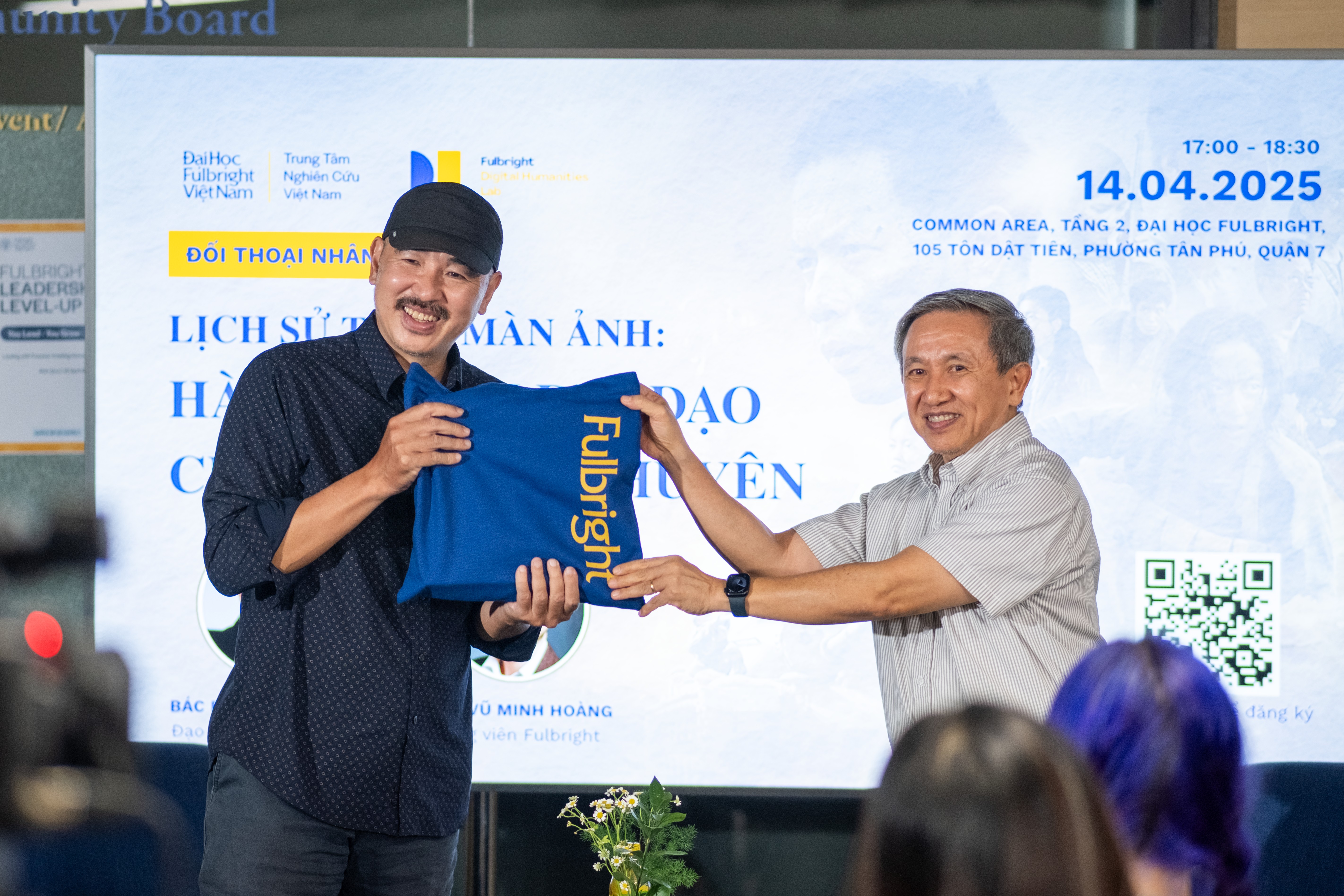
In a conversation with the Fulbright community on April 14th that kicked off the event series, Director Bui Thac Chuyen shared that this openness stems from a humanistic lens—portraying the survival journey of patriots rather than creating a film with heroic grandeur or collective heroism. War, beyond its epic narratives, is a grim reality filled with life-or-death choices, moral anguish… and at times, a burning desire for love. This nuanced and honest approach defines Bui Thac Chuyen’s filmmaking—he dares to look directly and speak candidly about the sacrifices of guerrilla fighters, making Địa Đạo a war film that transcends traditional molds.
Furthermore, beyond reimagining content, Vietnam’s war film genre requires significant investments in technology, set construction, and modern equipment to deliver authentic, intense cinematic experiences, Chuyên emphasized.
Following the opening discussion, two exclusive film screenings for Fulbright students were held on the evenings of April 15th and 16th. The atmosphere was vibrant and filled with anticipation. Tran Phuong Anh, a second-year Economics student, shared her emotions: “The film really made me reflect, especially the scene where Uncle Sau Lap, played by Meritorious Artist Cao Minh, calmly recounts the people’s victories despite the enemy’s threats. Facing life and death with such calmness and courage—perhaps that’s a mindset of readiness from the very beginning…”
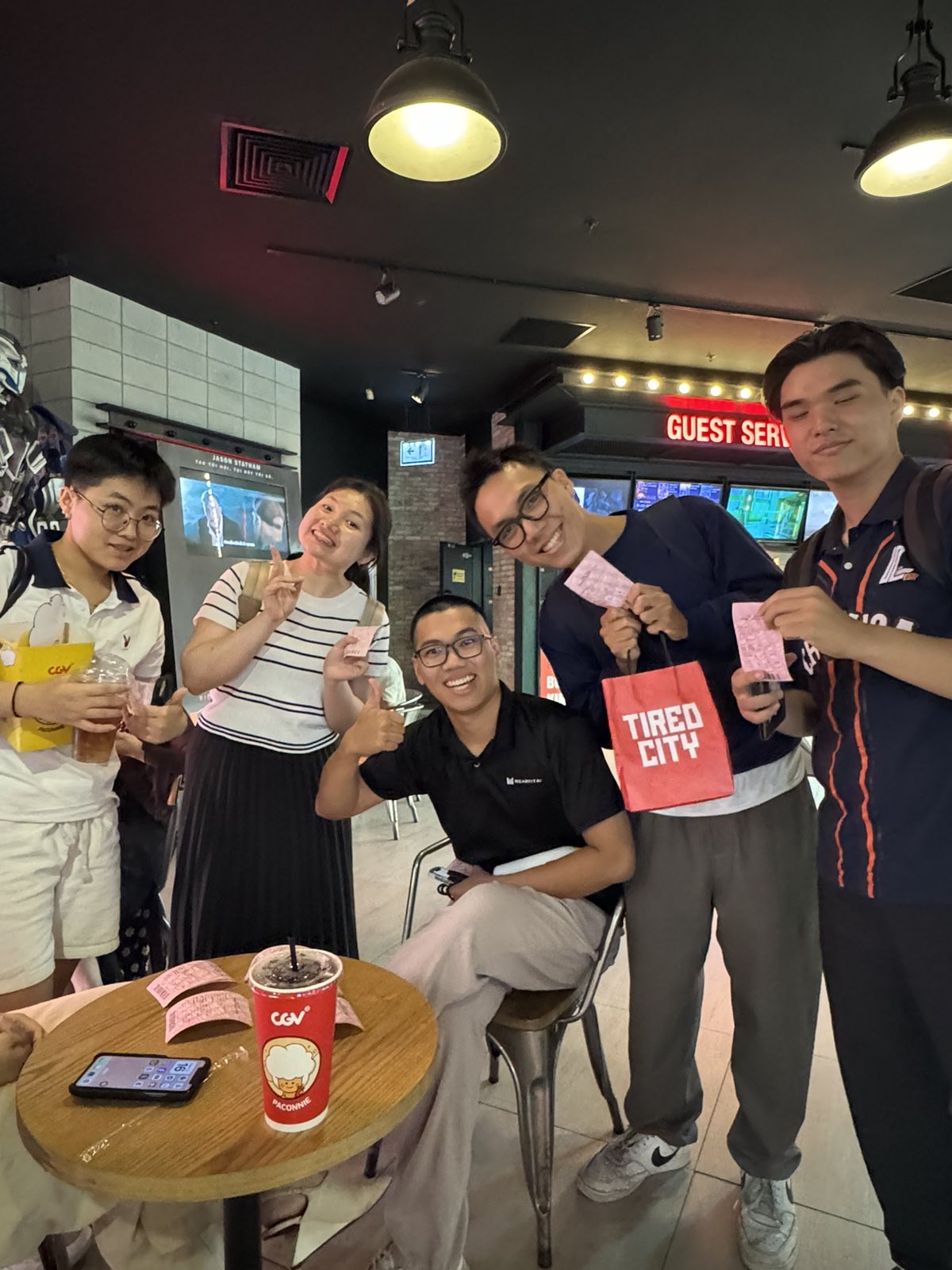
The Fulbright community eagerly waits for Địa Đạo screenings
Cinema: A Space to express the longing for peace
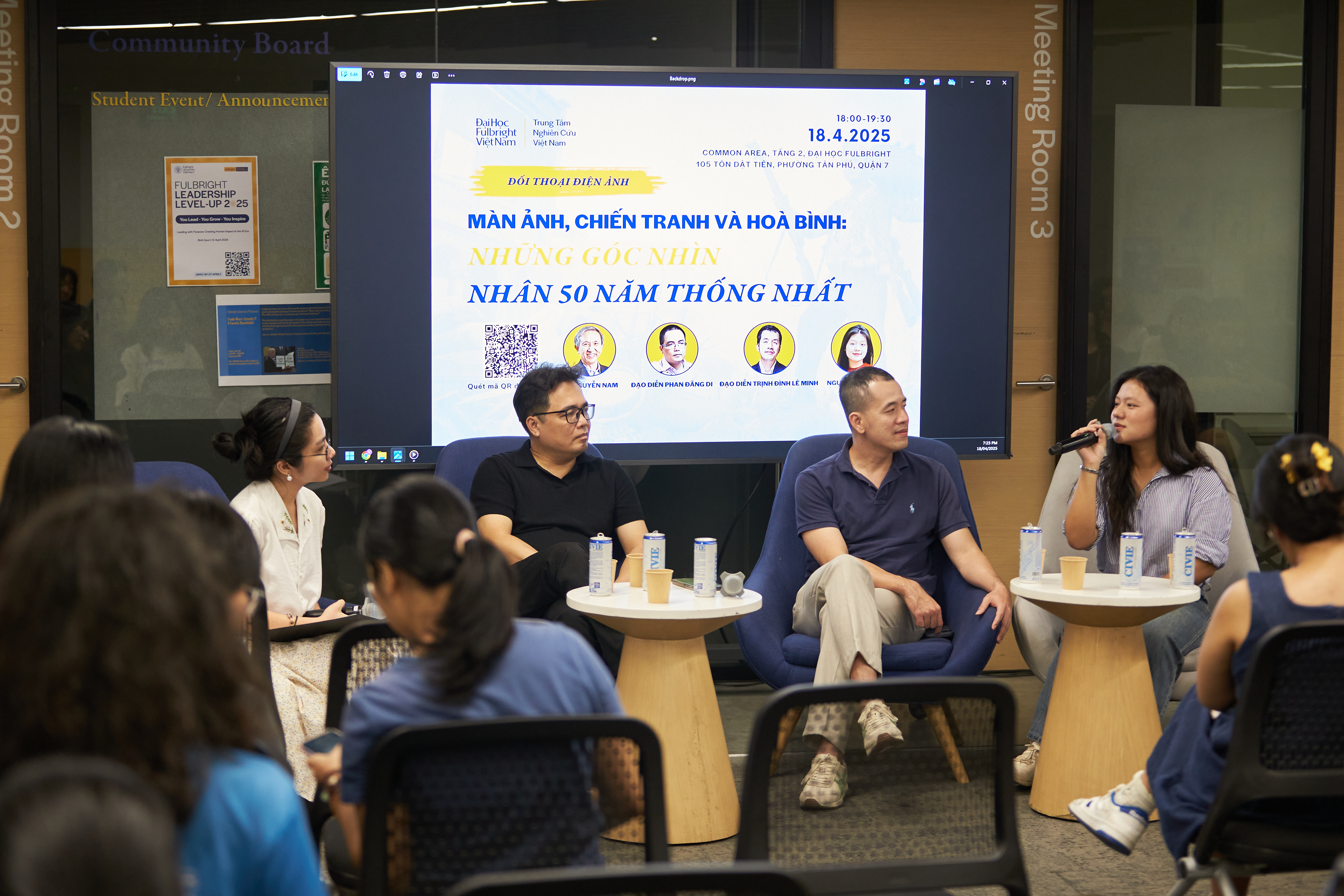
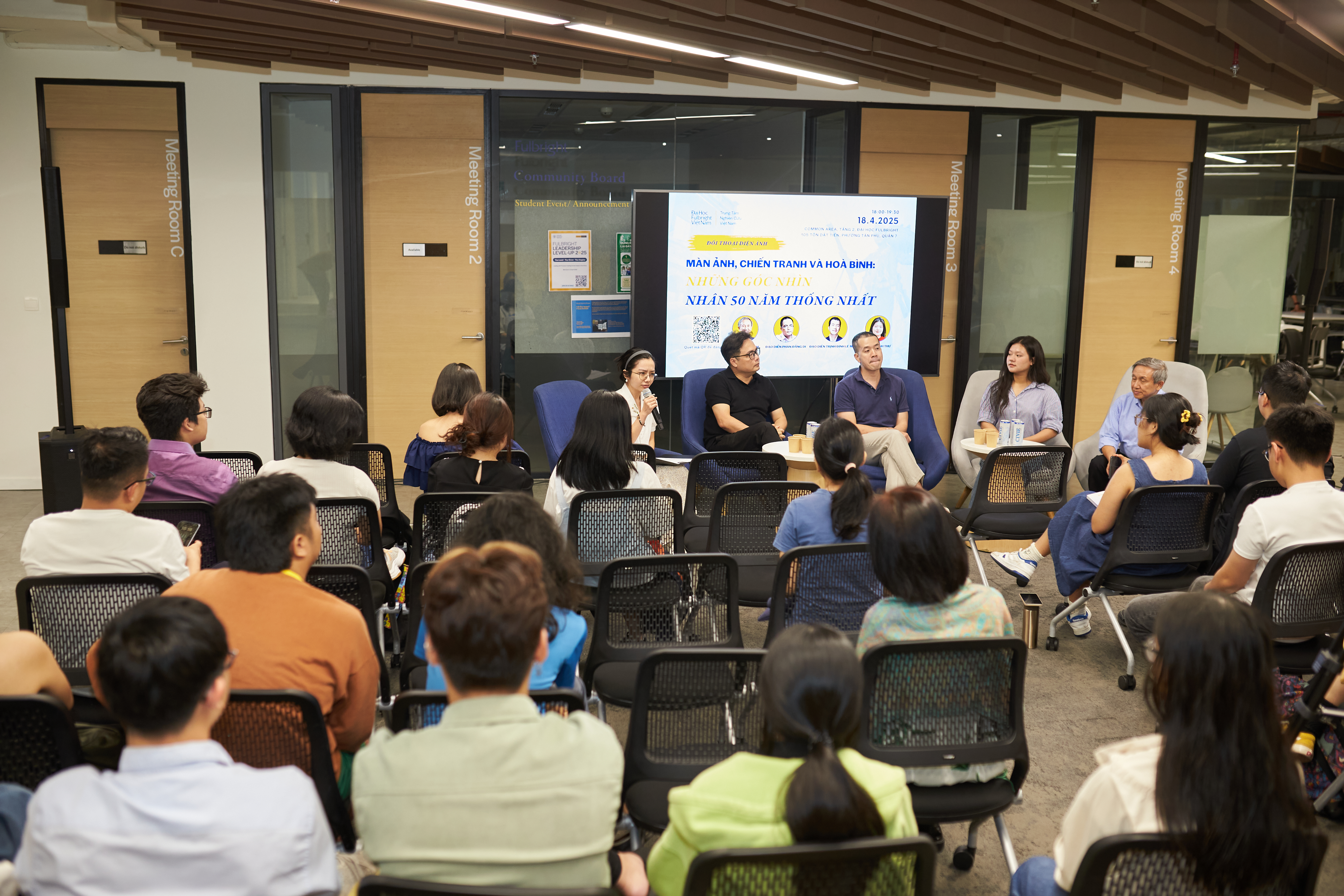
Continuing the event series, the film conversation “The Screen, War, and Peace: Reflections on 50 Years of Reunification” featured Director Phan Dang Di, Director Trinh Dinh Le Minh, Dr. Nguyen Nam, and Gen Z representative Nguyen Anh Thu, a Fulbright’s sophomore student. The intergenerational discussion reflected deeply on war memories and the yearning for peace through the lens of cinema.
At the talk, collective pain and intergenerational trauma were revisited. The national war may be over, but the battles within continue, haunting individuals with nightmares of gunfire, scars, and psychological wounds. Today’s youth, though not direct witnesses to the war’s horrors, still grapple with the challenge of understanding and empathizing with the experiences of previous generations.
Speakers from different generations came together to discuss cinematic legacies and the enduring aspiration for peace across eras.
In this context, cinema plays the role of a “field secretary,” capturing memories and creating space for personal stories to be told. Before a film can touch the audience, it must first “heal” its creator. The echoes of war subtly linger in familial ideological conflicts seen in films like Goodbye Mother by director Trinh Dinh Le Minh and Bi, Don’t Be Afraid! by director Phan Dang Di. Through these works, personalized definitions of war and peace begin to take shape.
Through these meaningful activities, Fulbright students gain knowledge and explore artistic methods of historical representation, fostering a spirit of learning, loving history, and preserving the nation’s values for future generations.
Như Ý