
As technology, especially artificial intelligence (AI), continues to advance rapidly, Vietnam’s education system must innovate to meet global workforce demands.
The presence of major technology corporations such as NVIDIA and Google in Vietnam presents significant opportunities but also raises the bar for workforce quality. Beyond strong expertise, professionals must be able to connect and apply knowledge across multiple disciplines. To meet this demand, Fulbright University Vietnam adopts a U.S.-style liberal arts and STEM education model, where students complete two years of foundational studies before specializing in their chosen fields in the final two years. This approach equips them with a well-rounded skill set to thrive in international work environments.
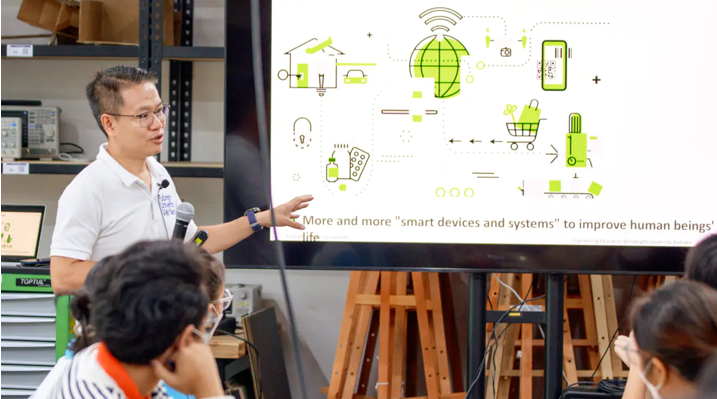
Many Fulbright students have successfully applied interdisciplinary learning to real-world challenges. Minh Hiếu, an alumnus of the Integrated Science program, leveraged AI to optimize material production processes—an achievement published in the ACS Omega journal. Meanwhile, the Human-Centered Engineering program stands out for its integration of technology, engineering, and the humanities, fostering entrepreneurial thinking and practical problem-solving skills among students.
Fulbright also collaborates closely with industry partners, securing a $1.5 million grant from Google to advance AI research and establishing partnerships with the New Turing Institute to integrate AI into research and education.
Read the full article in Vietnamese here.