
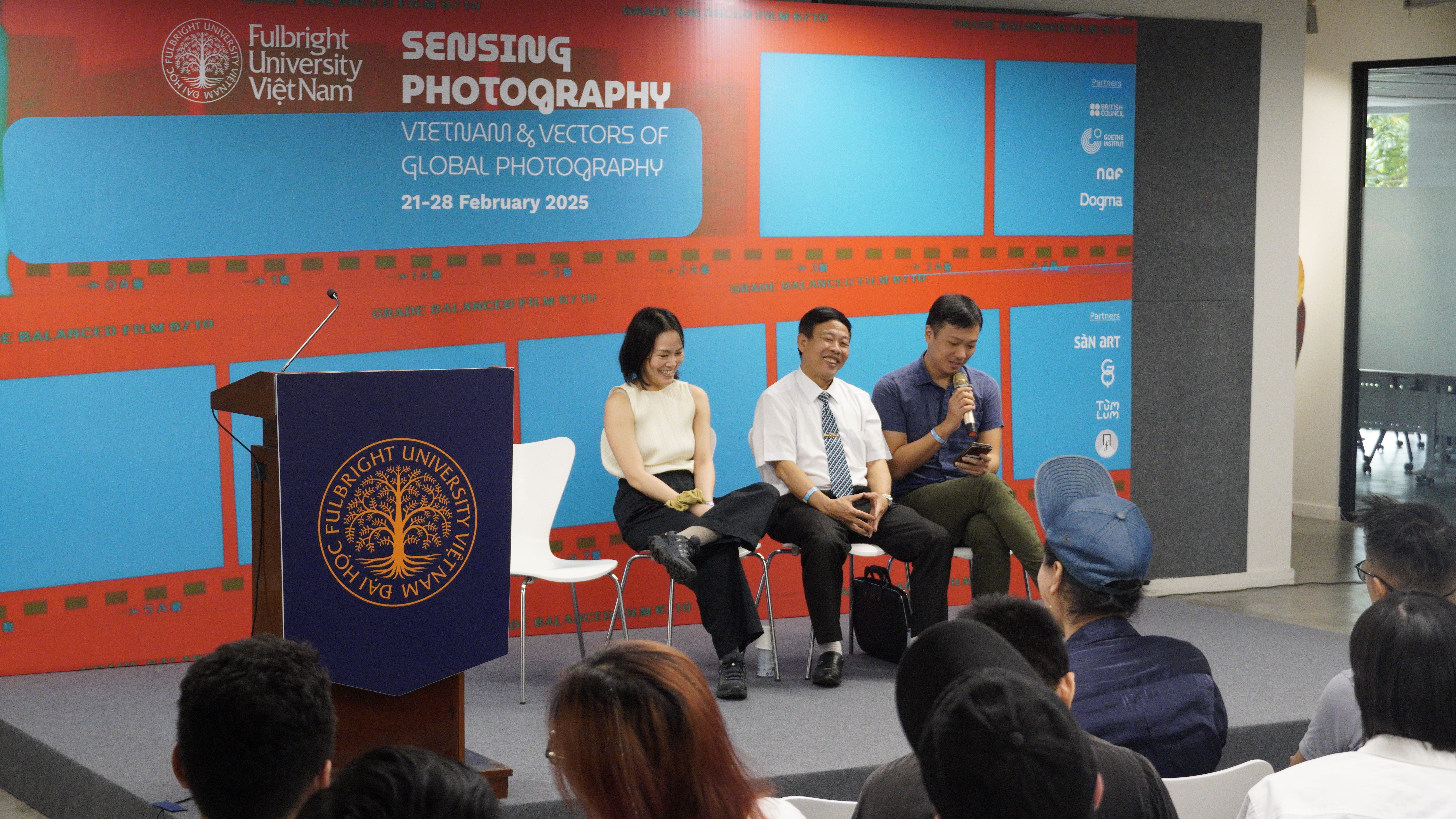
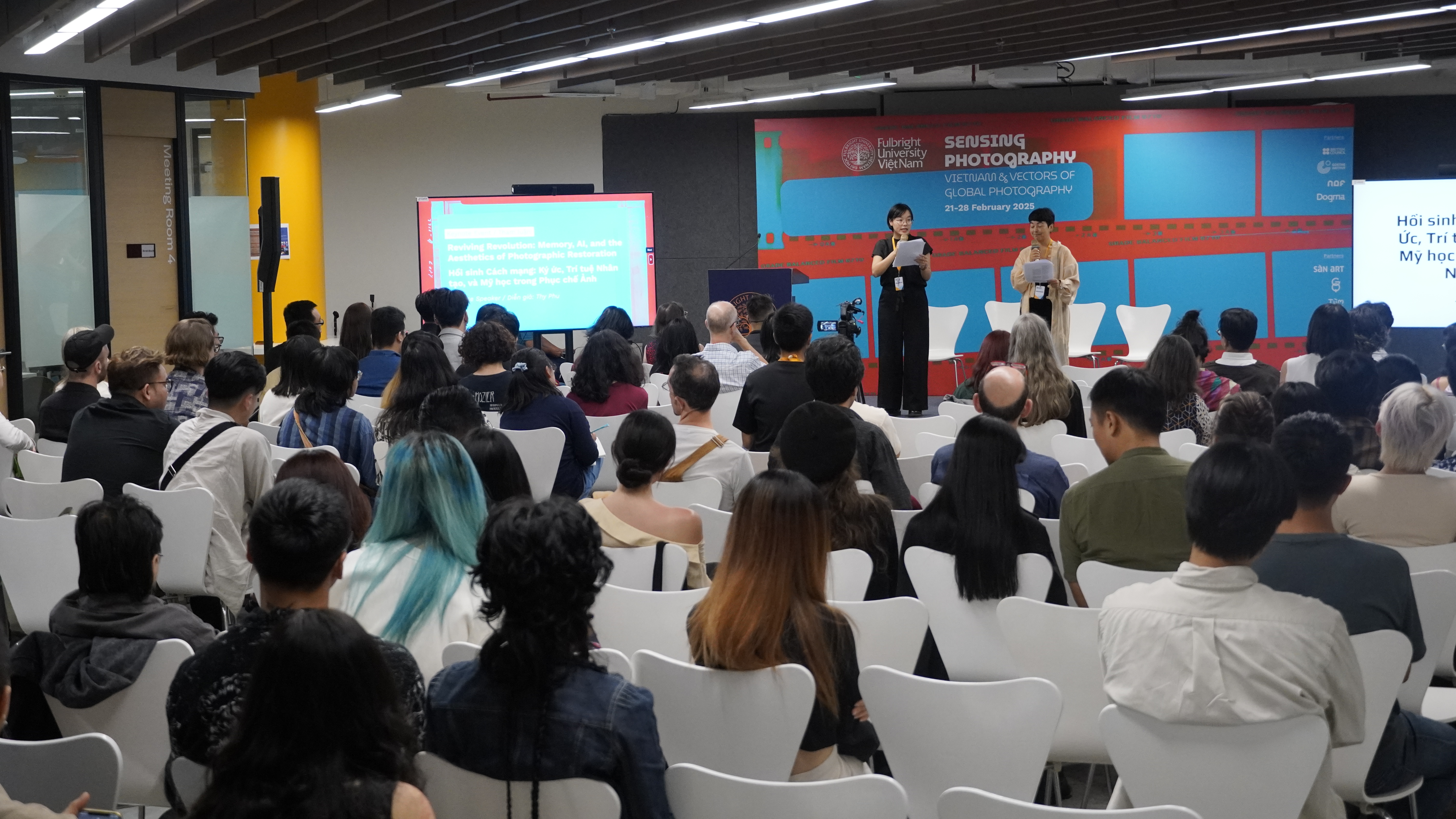
Recently, Fulbright University Vietnam is honored to host the thematic symposium “Sensing Photography & Vectors of Global Photography” to reexamines the role of photography in Vietnam’s history and global connections. Bringing together renowned scholars, artists, and researchers from around the world, this event provided a valuable opportunity to engage in discussions and deeply examine the intersections of photography with history, memory, and global visual cultures.
Photography Between Memory and Technology: When AI Revives the Past
In the opening remarks, Dr. Marcia France, Vice President for Academic Affairs and Provost of Fulbright University Vietnam, shared: “For me, photography has always been a fascinating field because of its ability to capture moments, bring history to life, and transport audiences to times and places they have never been. However, with the rapid and powerful development of artificial intelligence (AI) today, discussions on copyright, ethical concerns, and fundamental considerations of artistic definition are gaining momentum across global forums. This seminar offers a meaningful occasion for speakers and guests to express their perspectives on these issues, while also gaining deeper insights into the people, history, and culture of Vietnam through the lens of photographic art.”
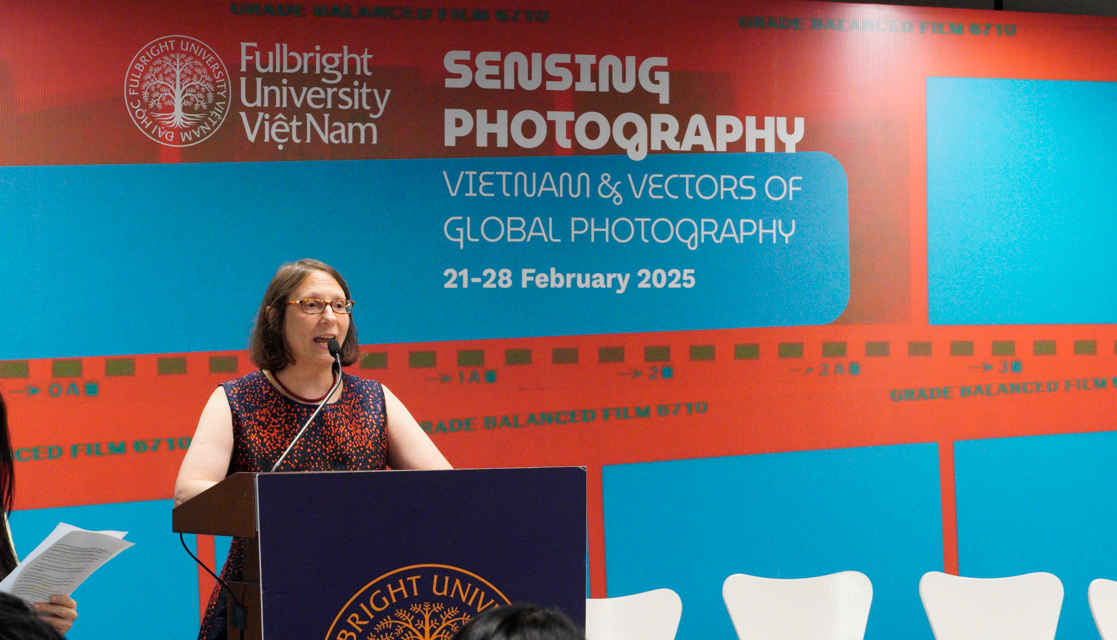
Dr. Marcia France, Vice President for Academic Affairs and Provost of Fulbright University Vietnam, delivering the opening speech at the event.
Photography and the Journey of Memory: From a Local Perspective to Contemporary Art
A highlight of the discussion on the first day was the keynote speech by Professor Thy Phu, a Distinguished Professor of Race, Diaspora and Visual Justice at the University of Toronto, Canada, on “Memory, AI, and the Aesthetics of Photographic Restoration.” In her talk, Professor Phu explored the role of photography in preserving and evoking fragments of memory related to revolutionary soldiers during the war. However, she also emphasized the risks posed by digital interventions in photography, as they have the potential to distort the truth. Going further, Professor Thy Phu examined photography’s connection between the departed and the living, as well as AI’s impact in reviving and reconstructing the past.
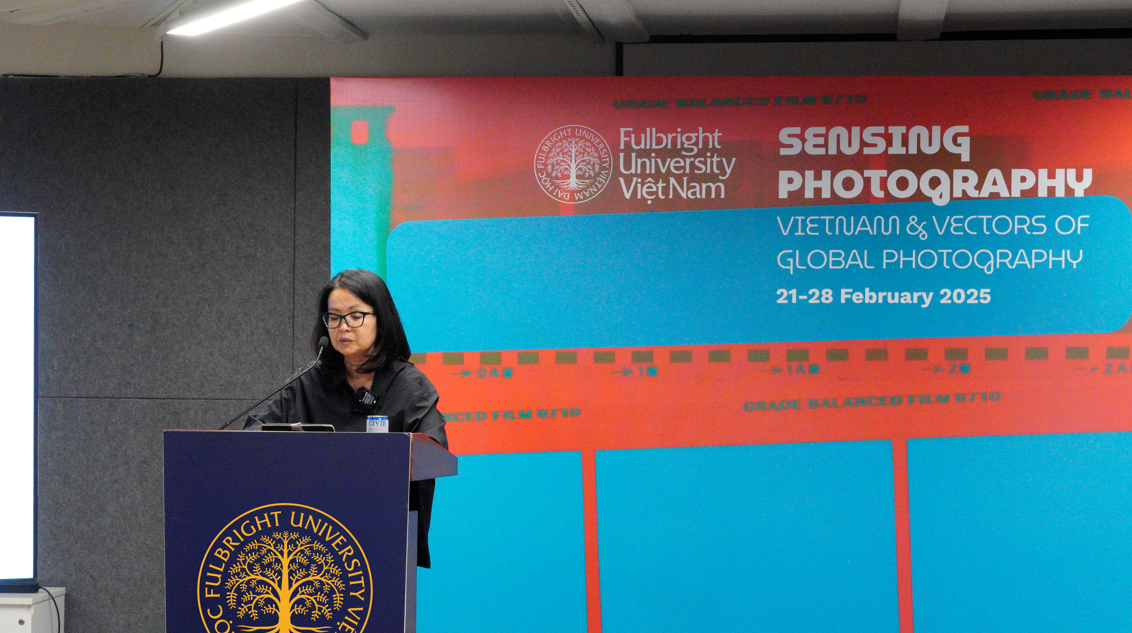
Professor Thy Phu delivering a speech on photography’s role in evoking memories of soldiers throughout the war in Vietnam.
On the second day, the seminar explored various topics closely tied to the culture and history of the Vietnamese community, including an exploration of Vietnamese photography through a local lens and an analysis of its place within the context of contemporary global art. Discussions also delved into the role of photography in reinterpreting the hidden aspects of colonial history and the memories of displaced individuals whose identities were deeply shaped by the postwar experience.
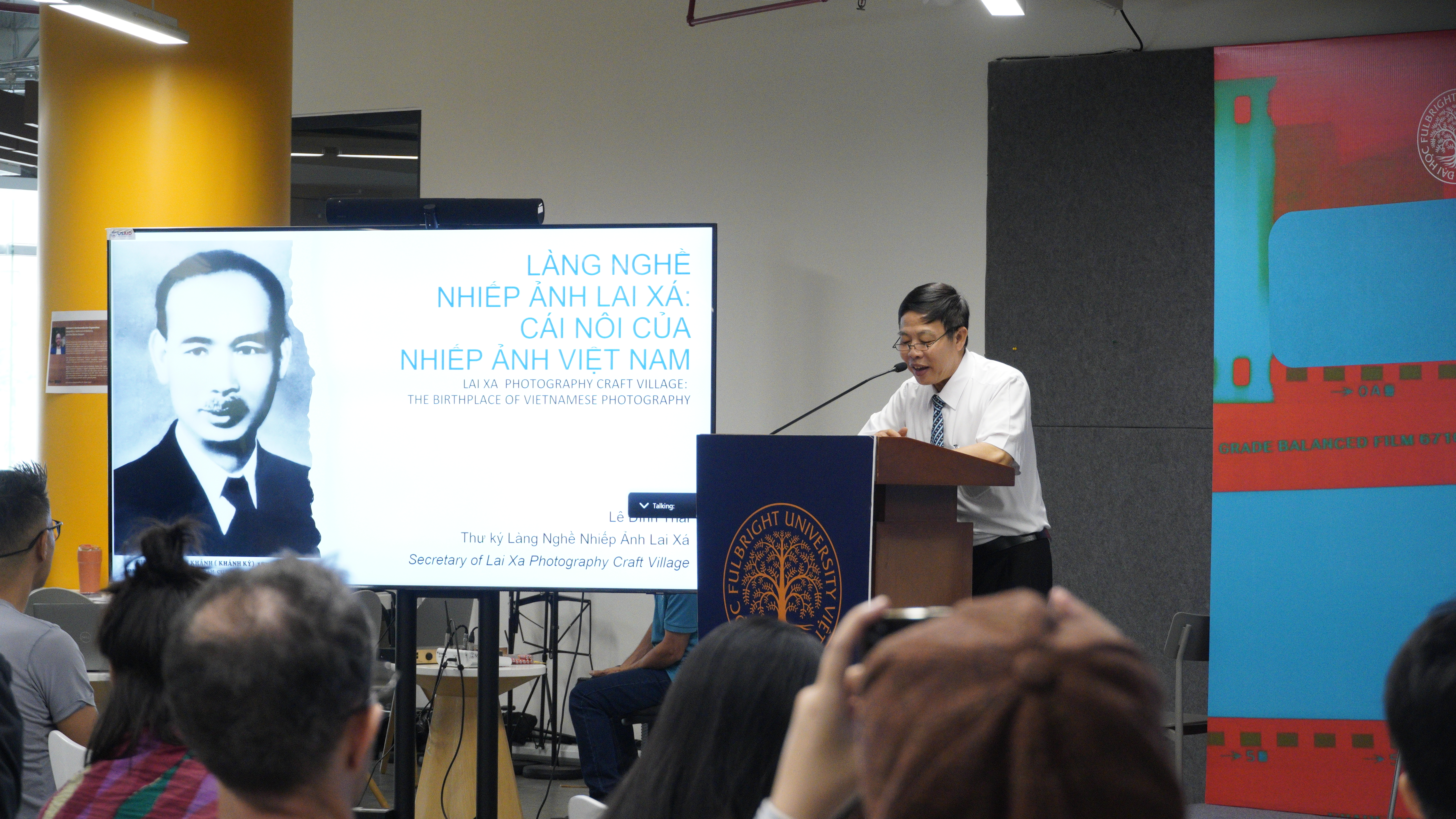
Mr. Lê Đình Thái, Secretary of the Lai Xa Museum of Photography, delivered a speech at the seminar on the topic “Photography Through a Local Lens.”
Discussing the origins of Lai Xa Museum of Photography within the broader development of Vietnamese photography, Mr. Le Dinh Thai, Secretary of the Lai Xa Photography Museum, emphasized the role of the craft village and local photography in general in preserving historical records from the nation’s prolonged resistance wars. Specifically, in the past, Nguyen Dinh Khanh (known as Khanh Ky) pioneered and developed the photography profession in the village while also making significant contributions to the Dong Kinh Nghia Thuc movement and supporting revolutionary activities. Khanh Ky had a close relationship with Nguyen Ai Quoc and Phan Chau Trinh, playing a key role in providing financial assistance and passing on photographic skills to revolutionaries in France. Following in his footsteps, photography was firmly established in Lai Xa, and many photographers from the village joined the resistance, becoming photojournalists who served revolutionary press and media. With over 130 years of history, the Lai Xa Museum of Photography holds invaluable traces of the past while also contributing to the local cultural and economic development. Therefore, Mr. Thai believes that preserving and honoring Lai Xa Museum of Photography is essential and crucial to safeguarding the nation’s heritage.
With its ability to frame, preserve, and shape memories, photography not only sheds light on stories of the past but also serves as a tool for envisioning the future. Through photography, the artist is both an observer and a contemplator of nature, yet at the same time, an engineer and researcher driven by hope and a desire to mend a world disrupted by upheaval. Within Vietnam’s historical context of immense wartime loss, Lê Quang Đỉnh emerged as a pioneering figure in contemporary art, recognized for his efforts in bridging contemporary thought with fading memories to reclaim history. In remembrance of this remarkable artist, the discussion “Photography in Vietnam and Contemporary Global Art: Reflections on the Late Artist Lê Quang Đỉnh” deeply moved participants with heartfelt recollections and analyses of his artistic legacy.
The second day of the seminar concluded with a discussion titled “Photography in Vietnam and the Hidden Layers of Colonial History,” featuring speakers such as researcher Yves Denéchère, photographer Nhu Xuan Hua, and PhD candidate Eléanore Trần. This conversation offered in-depth analyses of artistic works created by Vietnamese artists in the diaspora. With the goal of reclaiming lost memories affected by war, photography—through the eyes of these artists—became a means of observation, preservation, and a profound pursuit of answers regarding their own identities.
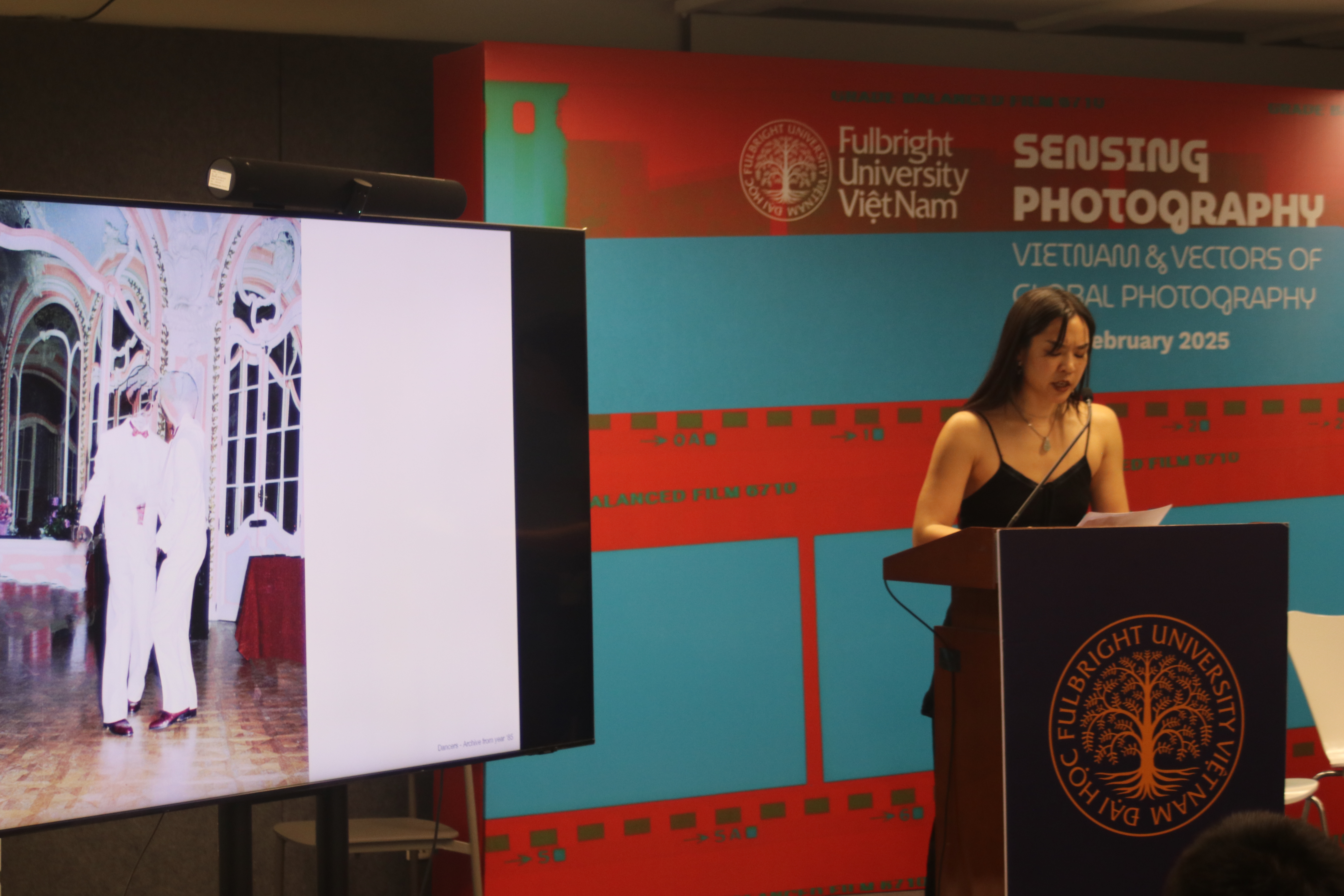
Photographer Nhu Xuan Hua delivered a speech on her work “Kinetic Orientations: The Consequences of Disrupted Memory,” which she created between 2017 and 2021.
As Vietnam approaches the historic milestone of 50 years since reunification, “Sensing Photography & Vectors of Global Photography” revisits the role of photography in the country’s history and its connections to global visual culture. Additionally, a series of practical workshops, talks, and sharing sessions will take place in the following week at partner venues, including Sàn Art, Dogma Collection, Noirfoto, and Studio Tùm Lum.
Như ý & Phương Anh